
You may have heard the term “dual redundancy system.”
But most people’s first reaction is:
“Does it just mean adding an extra battery?”
Actually, no.
Real redundancy isn’t about adding more pieces—it’s about designing a system that is inherently safe.
✅ 1. Where Does DJI’s Redundancy Come From?
DJI doesn’t follow the “just add another one” philosophy. Instead, they rely on:
High-energy-density batteries (one performs like two from others)
Intelligent power management
Multi-layer safety protection logic
Cell-level health monitoring
So real redundancy means:
Each core component is so reliable that you don’t even need a backup.
This is engineering-grade redundancy, not fake redundancy.
✅ 2. The True Mechanical Redundancy:
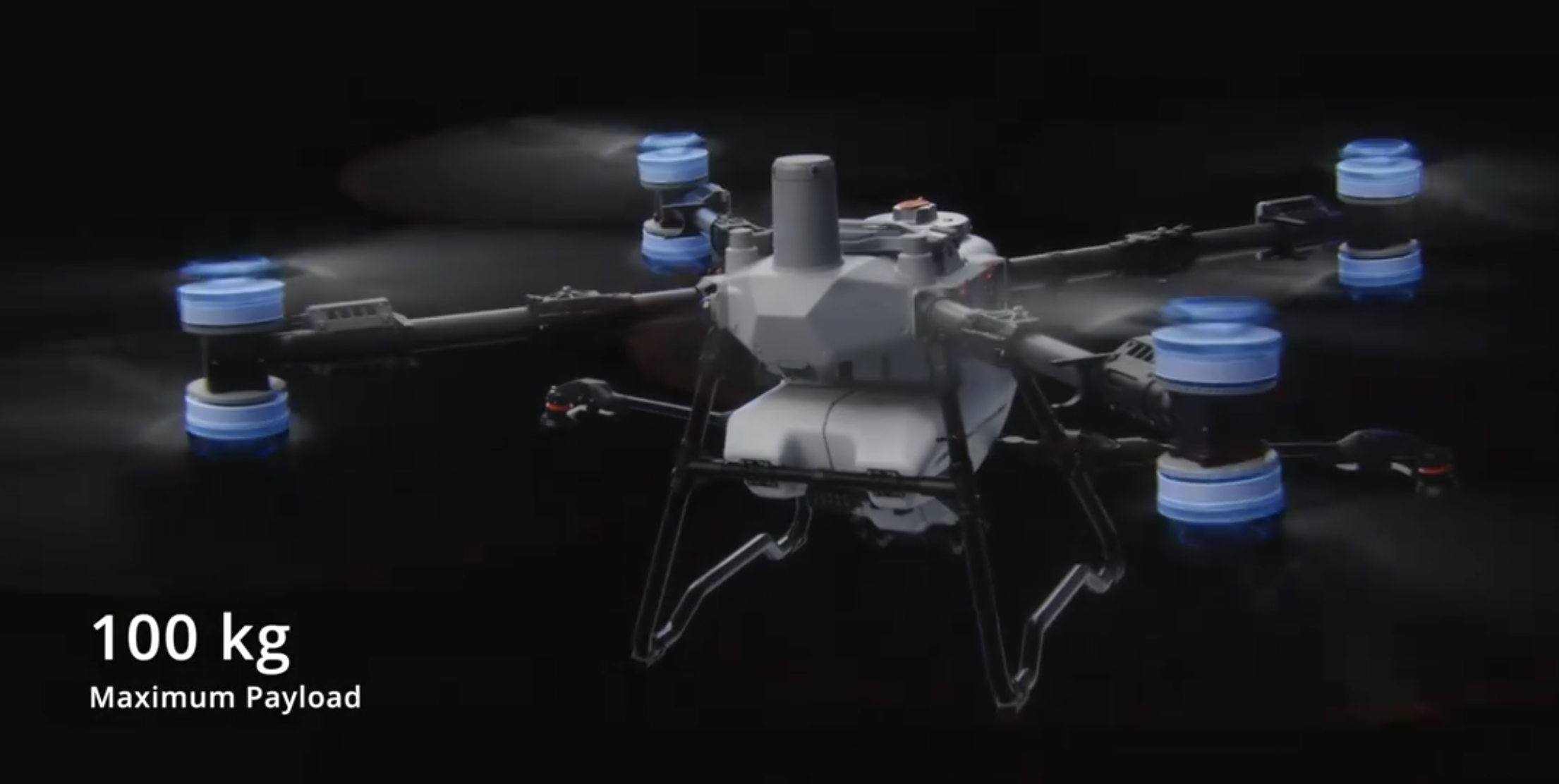
Coaxial Twin-Rotor System
DJI Agras drones use:
Dual motors + dual counter-rotating propellers (Coaxial Twin-Rotor design)
This is a high-end aviation-level structure.
What does it bring?
① More Stability
The two propellers spin in opposite directions, canceling torque automatically.
Even in strong winds, the drone stays stable—like having four extra seat belts holding it in place.
② Greater Lift
The upper and lower propellers work together on the same axis.
It’s like having two horses pulling the same cart—far more power than a single horse struggling alone.
③ Better Wind Resistance
Counter-rotating airflow is straight, powerful, and resistant to side gusts.
The drone is less likely to “swing” or get pushed off course.
④ Real Safety Backup
With two motors working together, if one has an issue, the other can still maintain attitude control.
This gives the drone a real chance to fly back safely.
This is true redundancy, built into the power system itself—
not “adding an extra battery for courage.”
The Easiest Way to Remember It:
DJI’s redundancy isn’t about adding more.
It’s about designing a system so good you don’t need to worry.
In other words:
Others rely on stacking components to look strong.
DJI relies on engineering strength to stand strong.
WONDERFULL INC. | DJI AGRICULTURE
Sales I Academy I Services I Parts
Office: 647 800 7952
Text : 647 287 6851
Address: 5955 10 Sideroad Innisfil, ON L0L 1K0