
Sept, 2, 2026
From agronomy and crop nutrition to drone application and systematic education, one principle connects them all: making the right decision within the right window.
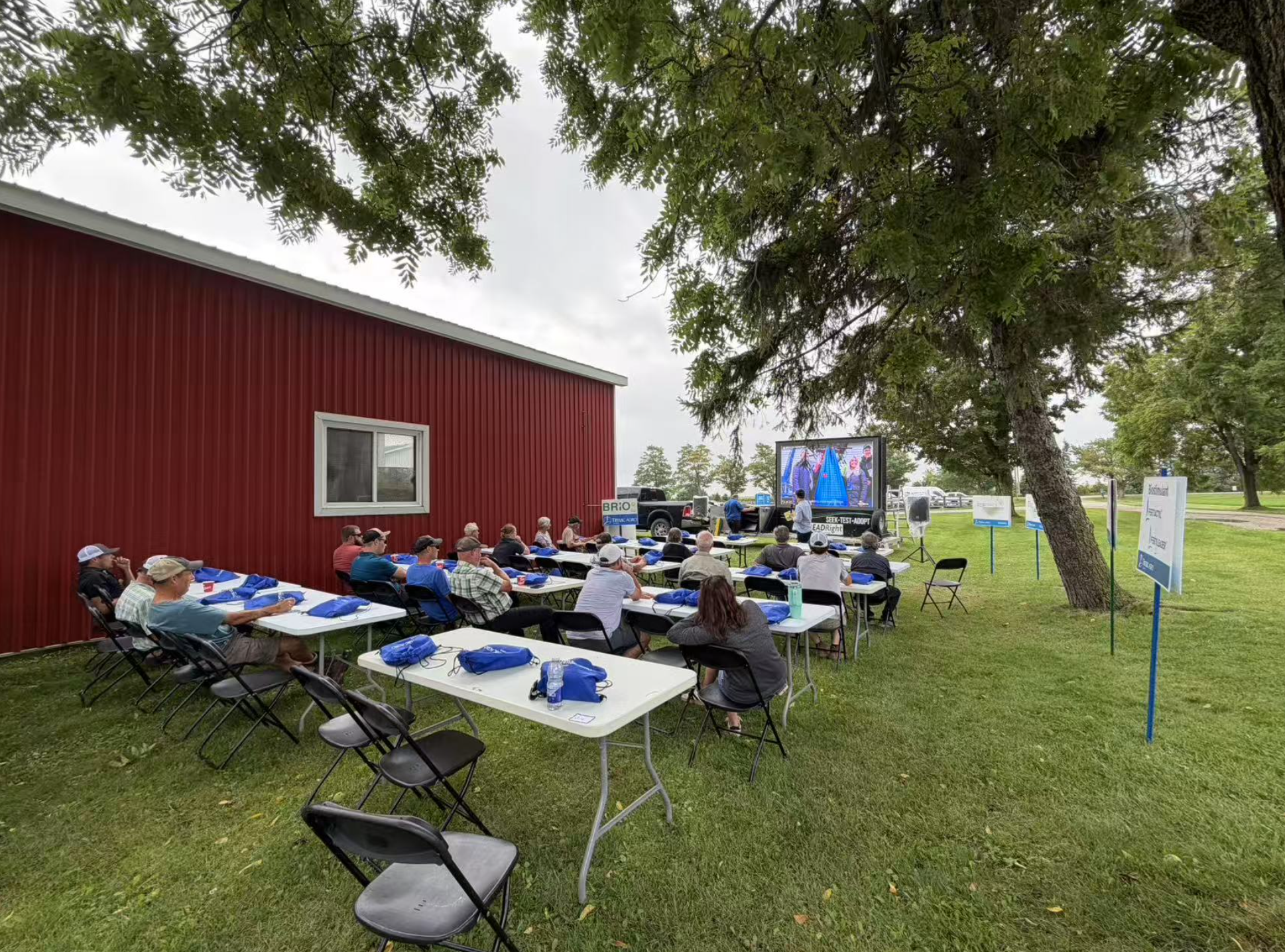
Today, we had the pleasure of participating in an agricultural event organized by Timac Agro.
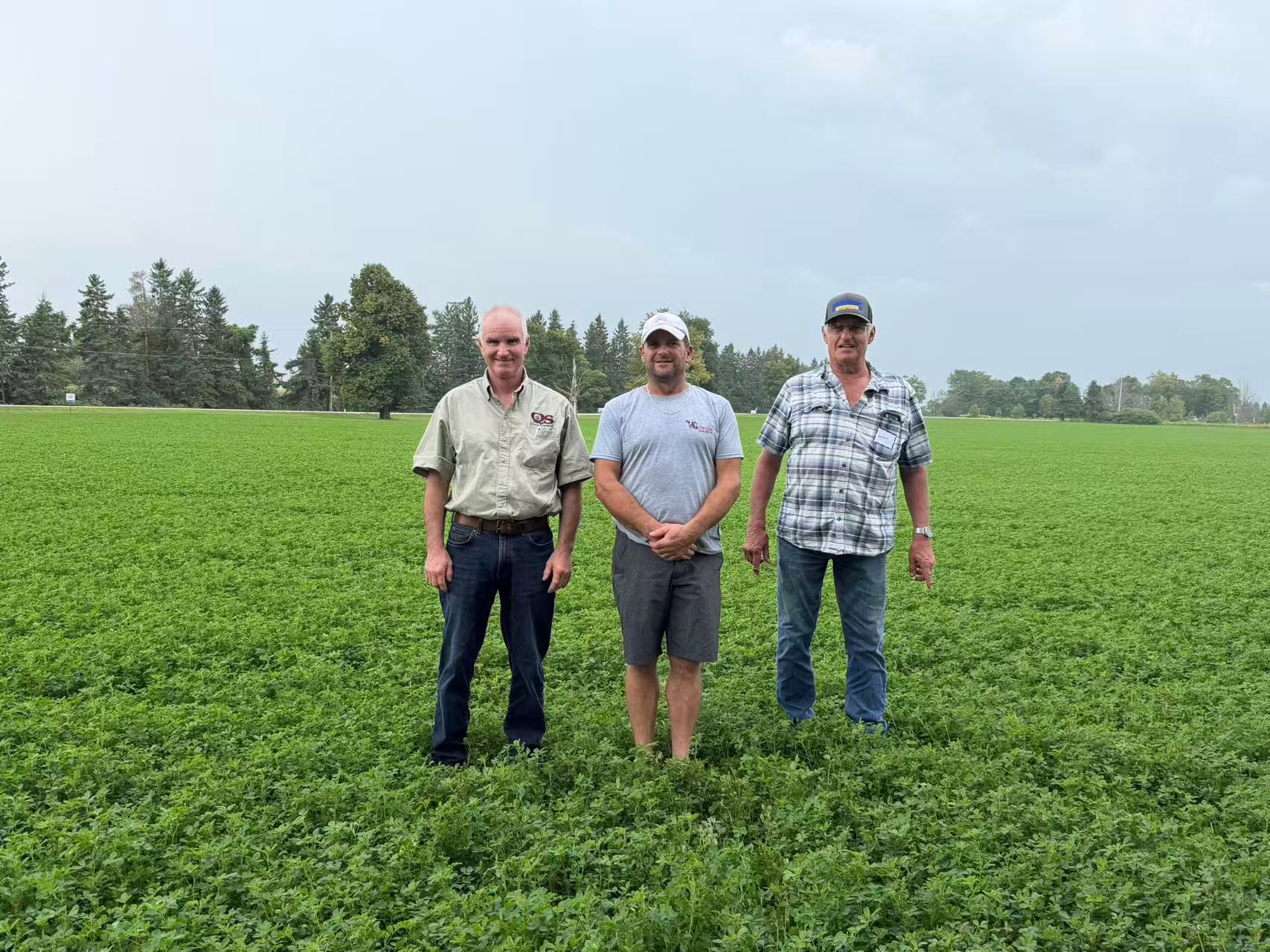
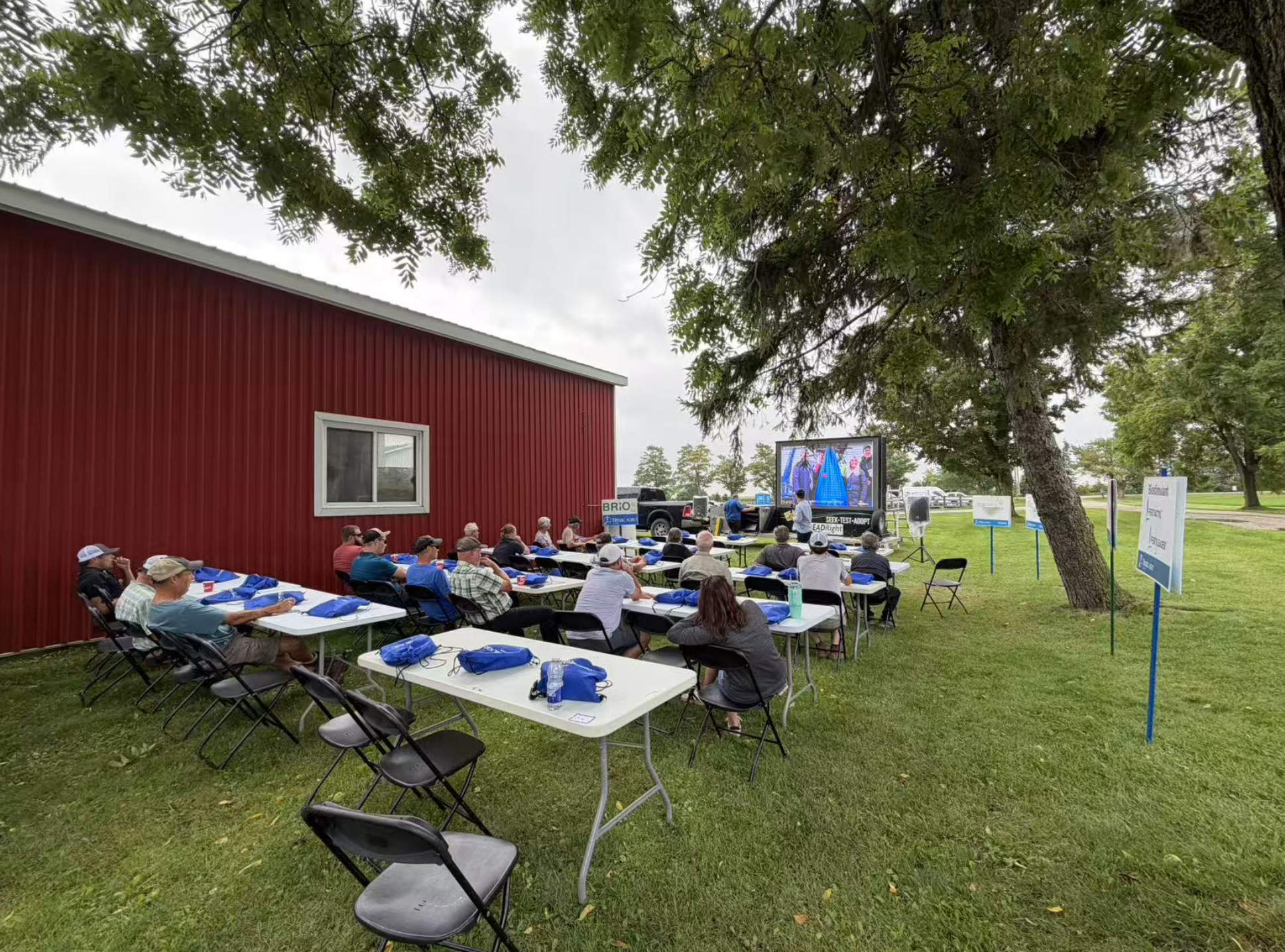
It is harvest season, and with persistent rain across the region, many growers are taking advantage of every available window to get their crops off the field. Understandably, attendance today was smaller than it might have been under different circumstances.
But what stayed with us was not how many people were there.
It was the depth of knowledge the Timac Agro team brought to the conversation.
They did not simply talk about what a product does. They talked about the crop itself — what happens at different stages of growth, when the plant is under stress, when it may need support, and why the timing of an application can matter just as much as the product being applied.
Plants cannot tell us what they need in words. But listening to Harry and the Timac Agro team explain what is happening inside the crop, you begin to realize that plants do communicate — through their growth, their response to stress, and the changes that happen at different stages of the season.
The job of good agronomy is to understand those signals.
And when that knowledge is explained well, it gives growers a better way to understand what their crops may be going through, when they may need support, and what can be done to help them recover, grow, and stay protected.
That level of understanding takes years to build, and you could hear it in the details they shared throughout the day.
The longer you work in agriculture, the more you come to appreciate the people around you who take their work seriously.
That appreciation is not necessarily about what someone has done for you personally. It comes from recognizing a shared professional commitment.
We see it in growers who face weather, markets, and countless uncertainties year after year, yet continue to work the land with remarkable resilience.
We also see it in agricultural companies that not only develop better products, but invest the time to bring agronomic knowledge, application practices, and crop protection strategies directly to growers in the field.
Today’s conversations brought us back to a simple question:
What are we really trying to protect?
Whether Timac Agro approaches that question through plant nutrition and agronomy, or Wonderfull approaches it through agricultural drones and application technology, the objective is ultimately the same:
To make the right decision and provide the right protection when the crop needs it most.
The Most Important Window Is Often the One You Cannot See
Many problems in agriculture begin long before they become visible.
During today’s discussion, Harry from Timac Agro shared a good example.
After forage is cut, the crop enters a critical period of recovery and regrowth. Immediately after cutting, the plant is in a vulnerable state and is already experiencing physiological stress, even though that stress may not yet be visible to the eye.
By the time the problem becomes obvious, the best window for intervention may already be narrowing.
That raises an important question for modern agriculture.
Instead of asking only:
“What do we do once we see a problem?”
Perhaps we should also be asking:
“Can we understand what the crop is experiencing earlier, and act within the right window?”
Today, growers have more tools than ever to help answer that question.
Better products, deeper agronomic knowledge, data, and increasingly capable agricultural technologies allow us to observe, analyze, and intervene more effectively.
From this perspective, plant nutrition, crop protection, agronomy, data, and drone technology are not separate subjects.
They are different parts of the same crop management system.
A Drone Is Not Agriculture’s “Silver Bullet”
For years, we have held a simple belief:
An agricultural drone is not a silver bullet.
A drone will not solve every agricultural problem simply because it can fly faster, carry more, or operate with greater automation.
It is a tool within a much larger production system.
But at the right time, in the right situation, and in the hands of someone who understands how to use it, it can be an extremely valuable tool.
This is particularly true when weather windows are short, field conditions prevent conventional equipment from entering, or growers need a more flexible way to complete a time-sensitive application.
But there is an important distinction:
Having a tool and understanding when, why, and how to use that tool are two very different things.
That distinction is one of the reasons we have invested so much, year after year, in agricultural drone education, technical resources, and after-sales support.
We Don’t Believe Making the Mistake Yourself Should Be a Requirement for Learning
A lot of what we know about agricultural drones today came from years of working through real problems in the field.
Drift is a good example. After someone has seen what can happen under the wrong conditions, they rarely look at wind, temperature, flight height, or droplet size the same way again.
The same is true with spreading. When seed goes out but the emergence is not what was expected, you start looking beyond the application rate and asking questions about the seed, calibration, distribution, field conditions, and timing.
Experience teaches these lessons very well.
The problem is that it can be an expensive way to learn.
Over the years, we have seen many situations that could have been avoided if the operator had understood a few things before going into the field.
That led us to a question we still think about today:
If we already understand why a mistake happens, does the next grower or operator really need to make the same mistake to learn the lesson?
We don’t think so.
We would rather take what has already been learned — from problems, mistakes, troubleshooting, and successful applications — and make that knowledge available before someone faces the same situation themselves.
That idea has shaped much of what Wonderfull Academy has become.
Why Wonderfull Academy Exists
Wonderfull Academy did not begin because we wanted to create something called an “academy.”
It started with what we were seeing in the real world.
In the early years of agricultural drones in Canada, we saw accidents. We saw operators struggle with things they did not fully understand. And in some cases, we saw problems that could probably have been avoided if the right knowledge had been available earlier.
Those situations were difficult to watch.
We kept coming back to a very simple thought:
If we were the ones flying, would we want to learn that lesson through an accident?
Of course not.
And we did not want our customers to have to learn that way either.
So we pushed ourselves to go deeper.
When we saw the same type of mistake more than once, we studied it. When operators consistently struggled with a certain concept, we worked on how to explain it better. When a new problem appeared in a real operation, we brought it back into the training.
Years ago, we completed the full DJI Agricultural Drone Academy instructor training and qualification process. That gave us a strong technical foundation in DJI aircraft systems, operation, maintenance, troubleshooting, flight methodology, and safety.
We continued building from there.
Today, Wonderfull is also a Transport Canada–recognized RPAS Flight School and Certified Advanced Flight Reviewer.
But completing DJI Academy training and becoming a recognized flight school were never the end of the work.
There was still a harder question:
How do you take all of that knowledge and make it truly useful to someone standing in a Canadian field?
We could not simply take DJI training material, repeat it in a classroom, and call that agricultural drone education.
Canadian operators work under Canadian aviation regulations, in Canadian weather, and across very different crops and field conditions. Many of the questions they bring to us cannot be answered well from a manual alone. They make much more sense once you have worked with the aircraft in real agricultural operations.
So what we learned through DJI became one part of our training.
Canadian aviation regulations and flight safety became another.
And then came everything the field was teaching us — equipment issues, troubleshooting, customer questions, different crops, different products, application results, and the situations where things simply did not go as expected.
That is really how the Wonderfull Academy curriculum developed.
It was not simply written from a manual.
It was built, piece by piece, through years of real work.
And it continues to evolve as the technology, regulations, and agricultural applications continue to change.
For us, training is not about giving someone a list of settings to copy.
Conditions change. Crops change. Products change. Weather changes. No two fields are exactly the same.
What matters is whether an operator understands why a setting is being used, what factors can change the result, and what to look at when the situation in front of them is different from the example they learned in class.
We want operators to understand the aircraft, but also what the aircraft is doing in an actual agricultural application.
We want them to understand the regulations, but also how those regulations affect decisions in the field.
And we want difficult technical knowledge to be understandable to people who may not come from an aviation background at all — growers, agronomists, crop advisors, or anyone trying to understand where this technology fits into an agricultural operation.
That is the part we have worked hardest on over the years: bringing technical knowledge and real application experience together in a way that people can actually use.
For us, that is what gives Wonderfull Academy its meaning.
Not the name.
What matters is whether the knowledge behind it can help someone work more safely, understand the technology more clearly, and avoid a mistake that someone else has already learned from.
If knowledge can do that, then it is doing more than teaching. It is also protecting people.
Today, We Never Got to the Most Visually Exciting Part — Flying the Drone
We had originally planned a live drone demonstration as part of the day.
But the discussions ran longer than expected, and by the time we looked at the schedule, there simply wasn’t enough time left to do the flight properly.
Rather than rush through it just because it was on the agenda, we decided to keep the conversation going.
And honestly, we were okay with that.
A drone demonstration is useful. People can see how the aircraft operates, how a mission is set up, and what the application looks like in the field.
There will always be another opportunity to show that.
What is harder to recreate is a room full of growers and industry professionals asking good questions, comparing experiences, and talking through real problems.
For us, that is also what drone training should be about.
Knowing how to make the aircraft take off is important, but so is understanding what happens after it takes off — how weather affects the application, why a certain setting works in one situation but not another, and when the conditions are telling you that today may not be the right day to fly.
So although the drone never left the ground today, we still felt the time was well spent.
If someone leaves with a better understanding of what to look for the next time they are making a decision in the field, that is more useful to us than simply putting on a good flight demonstration.
Why Was the Seed Applied, but the Expected Emergence Never Came?
During today’s session, we also discussed some very practical questions that agricultural drone operators are encountering this season.
For example:
Why can seed be applied — sometimes even at a higher-than-expected rate — yet still fail to produce the emergence we expected?
Why can the same drone, with seemingly similar settings, create very different drift risks under different weather and field conditions?
On the surface, these may appear to be “drone problems.”
But the real answers often extend far beyond the drone itself.
Seed characteristics, distribution uniformity, soil and crop conditions, wind speed, temperature, humidity, droplet size, flight height, speed, swath width, and the actual application window can all influence the final result.
This is why we continue to say:
The goal is not simply to understand the machine. It is to understand the agriculture behind the machine.
Drones will continue to become smarter.
Software will continue to become more automated.
But sound agricultural applications will still depend on knowledge and judgment.
The Value Behind 10,000+ Acres Is More Than Just “Experience”
Today, we were also very pleased to welcome Kurt Beckley of Altitude AG in the United States, who joined the event by video to share his real-world experience with growers.
Kurt has more than 10,000 acres of annual agricultural drone experience in potato production.
That level of field experience is valuable for reasons that go far beyond the number of acres flown.
Behind those 10,000+ acres are changing weather conditions, different fields, narrow application windows, operational decisions, parameter adjustments, drift considerations, application results, and inevitably, problems that had to be understood and solved.
We want to hear:
“What did you do when it worked?”
But an equally important question is:
“What went wrong, why did it happen, and what did you change afterward?”
And this brings us back to how we think about education.
We share experience not because we want everyone else to repeat that experience for themselves.
Quite the opposite.
We want the lessons learned across someone else’s 10,000 acres to become knowledge that another grower can use on their first 100 acres — or even their very first acre.
That is when experience becomes truly valuable to an industry.
Knowledge Is a Form of Protection
Today’s event was also a good reminder of how closely these different parts of agriculture are connected.
Timac Agro came from the agronomy side — understanding what the crop needs, when it needs it, and how the right product can support it.
Our part of the conversation was more about application: once you know what needs to be done, how can technology help you get it done properly and within the right window?
That is where we see the value of knowledge.
A drone can give a grower another way to get into the field at the right time, but the drone itself cannot tell you everything you need to know.
You still need to understand the crop, the conditions, the product being applied, and the limitations of the equipment.
This is also why we have spent so much time over the years on training and technical support. We want growers to understand these connections before they have to learn them through a bad result in the field.
To us, knowledge is also a form of crop protection.
Sometimes it helps you recognize the right window.
Sometimes it helps you avoid an application that should not be made.
And sometimes it simply helps you ask the right question before making a decision.
That may not be as exciting as watching a drone take off, but over the course of a season, it can matter a great deal more.
When Crops Need Us Most
Agriculture has never had one product or one technology that can solve every problem.
Good crop protection comes from understanding the crop, choosing the right product, knowing how to apply it, and perhaps most importantly, recognizing the right time to act.
Technology can give us more options, and experience certainly makes us better. But one of the reasons we care so much about education is that not every lesson needs to be learned the hard way.
If someone has already encountered a problem, figured out why it happened, and found a better way forward, that knowledge should be shared.
That is how we help each other make better decisions in the field — especially when the window is short and the crop cannot wait.
We want to thank the Timac Agro team for the work they put into today’s event, and Harry for sharing his agronomic knowledge with everyone in the room.
We also want to thank Kurt Beckley of Altitude AG for joining us and openly sharing what he has learned from extensive real-world drone operations.
After spending many years in agriculture, you develop a real respect for people who take their work seriously.
Farmers do it every season, through weather and uncertainty.
And throughout the industry, there are people who keep testing, learning, improving, and then take the extra time to share what they have learned with others.
That was probably what we appreciated most about today.
Not the size of the event, and not whether we managed to put a drone in the air.
It was simply a group of people willing to spend a day sharing what they know, so that someone else might make a better decision when it matters in the field.
And sometimes, that is how agriculture moves forward.
WONDERFULL INC.
Transport Canada Recognized RPAS Flight School
Certified Advanced Flight Reviewer
Drone Compliance | Academy Training | Sales & Service
Office: 647-800-7952
Text: 647-287-6851
5955 10 Sideroad
Innisfil, ON L0L 1K0
Canada