
What we may be underestimating is not only the risk of flying, but the knowledge required to operate an agricultural drone well.
Agricultural drones are going through a noticeable change in 2026.
As regulations have opened up, more growers are exploring, purchasing, and operating agricultural drones. There are more choices on the market, and buying a drone is easier than it was only a few years ago.
In many ways, this is exactly what the industry has been waiting for.
Yet after attending grower association meetings, farm events, and industry discussions this year, we have actually become more concerned about something.
The questions people bring to us are changing. They are no longer limited to:
“How much does this drone cost?”
or:
“How many acres can it cover in a day?”
Increasingly, we hear questions such as:
“Why did my drone hit a tree?”
“Why did I suddenly lose signal during a flight?”
“Why did I have a drift issue after spraying?”
We are also hearing another question more often:
“I spread the seed with the drone, so why was the emergence poor? Did I set something incorrectly?”
At first glance, these seem like completely different problems. One is about flight safety, another about communication and positioning, another about spray performance, and another is already about the final agronomic result in the field.
The more of these questions we hear, however, the more we think they point to the same underlying issue:
What may be underestimated is not simply the risk of the drone itself, but the knowledge required to operate an agricultural drone properly.
Today’s agricultural drones are remarkably intelligent machines. Automated flight planning, RTK, obstacle sensing, automated spraying and spreading, mission resumption — many jobs now appear to require little more than entering a few settings and pressing Start.
That convenience can easily create a misconception: as the aircraft becomes more automated, the operator needs to understand less.
After years of working with these systems in real agricultural environments, our experience has led us in the opposite direction.
The more automated the machine becomes, the more important it is for the operator to understand when that automation can be trusted — and when it cannot.
Misconception #1: If You Can Fly the Drone, You Know How to Use an Agricultural Drone
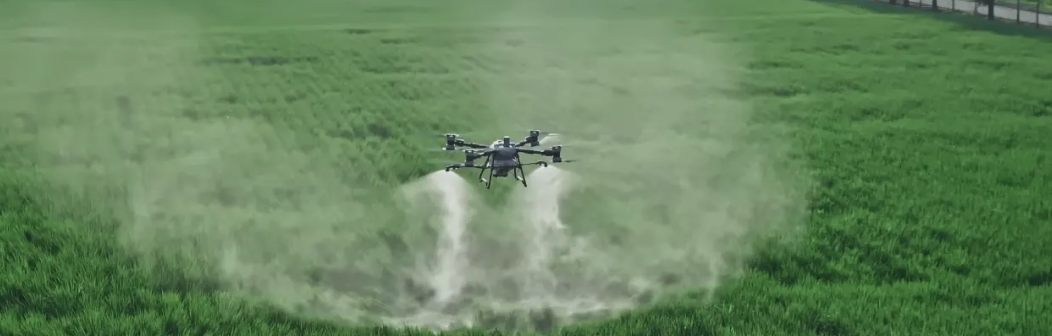
Why might the aircraft behave unexpectedly as it approaches a tree? What does a change in RTK status actually mean? Why can an obstacle sensing system detect something in one situation but not respond the way you expected in another? What exactly will the aircraft do if communication is lost, and what logic will it follow if Return-to-Home is triggered?
If no one has explained these things to you, you may never notice that there is a gap in your knowledge while everything is operating normally.
The real test often comes during those few seconds when something is no longer normal.
Those few seconds can determine whether an expensive piece of equipment comes home safely.
This is why good training should involve much more than showing an operator where to draw a route, where to enter a setting, and which button starts the mission. It should help the operator understand why the aircraft behaves the way it does, under what circumstances it may behave differently than expected, and what to do when that happens.
Misconception #2: Smarter Equipment Means the Operator Needs to Know Less
Every new generation of agricultural drones brings new capabilities: better obstacle sensing, more precise positioning, increasingly automated flight planning, and more sophisticated spraying and spreading systems.
Those advances matter enormously, but adding another capability to the aircraft does not automatically give the operator the knowledge required to understand and use it.
Think about learning to play the piano.
If we want a child to truly learn to play, we would never assume that because a newer, smarter piano has been released this year, there is no longer any need to learn the fundamentals. We would not simply explain the piano’s new features and expect the child to start playing Beethoven.
The fundamentals still matter. The student still needs to understand the keyboard, rhythm, fingering, scales, and technique, and then spend time learning how those pieces come together to make music.
A better piano can help a skilled pianist perform better, but a better piano cannot learn to play on your behalf.
Agricultural drones are not so different.
Newer aircraft can reduce the workload on the operator, but the fundamentals of flight, positioning, communication, the limits of obstacle sensing, environmental judgment, and the principles behind spraying and spreading do not become irrelevant simply because the machine has become more advanced.
In fact, as more decisions are handed over to automated systems, it becomes even more important to understand the conditions under which those systems can be relied upon, and where their limits begin.
Training, therefore, should not stop at explaining what new features were added to this year’s model. It should help an operator understand why those features work the way they do and when they should not be relied upon completely.
Misconception #3: If the Drone Completed the Mission, the Agricultural Job Was Successful
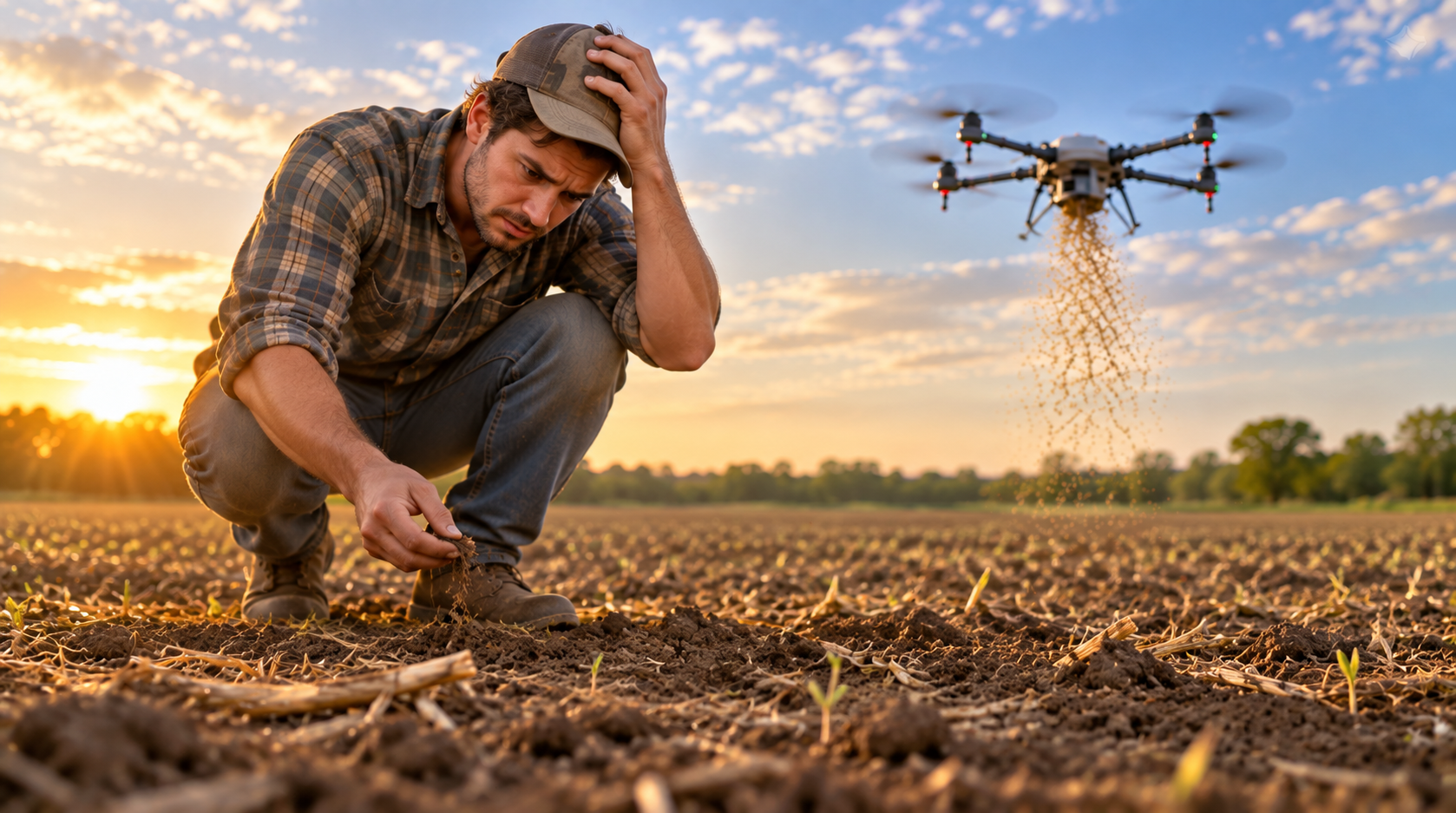
Another question we have been hearing more frequently is:
“I spread the seed with the drone, but emergence wasn’t very good. Did I set something wrong?”
Sometimes a setting may indeed be part of the issue, but there is an important distinction here:
Completing a spreading mission and achieving the desired result in the field are not the same thing.
The purpose of an agricultural drone is not to put Mission Completed on the screen. Its purpose is to perform a real agricultural job.
That means knowing how to enter a setting and understanding why that setting is appropriate are also two different things.
The same applies to spraying and spreading.
Parameters are tools. The result in the field is the objective.
There is much more we can discuss about setting up different spreading applications, calibration before a job, and evaluating actual field performance, and those are topics we can cover separately.
Don’t Just Find a Parameter. Understand Why That Parameter Works.
Over the past few years, we have repeatedly heard questions such as:
“Who has tested this?”
“Does anyone have the parameters?”
“What number should I use?”
It is completely understandable to want a proven number that can be entered into the aircraft and used immediately.
Manufacturers provide recommended parameters. Researchers conduct tests. Experienced operators develop settings that have worked in their own fields. All of this information can be extremely valuable.
The more important question, however, may not be whether you can find the number. It is whether you understand why that number works.
A simple analogy is a rice cooker.
The manufacturer has already designed the appliance, explained how it works, and provided basic instructions. We do not need to reinvent the rice cooker every time we prepare a meal.
At the same time, cooking white rice, black rice, mixed grains, or beans may require adjustments in water and cooking conditions.
That does not make the manufacturer’s instructions unimportant, nor does it mean every user needs to start testing everything from zero. It simply means we need to understand what is fundamental and what is variable.
Agricultural drones work in much the same way.
Manufacturer specifications and recommended settings provide an essential foundation. Research and testing help us understand performance under different conditions, while experienced operators contribute valuable lessons from real fields.
But when one operator tests a setting with a particular crop or seed, product, aircraft configuration, and set of operating conditions, the result first tells us what worked under that combination of conditions.
Change the conditions, and some of the settings may need to change as well.
The goal, therefore, should not simply be to ask:
“What number did they use?”
It should also be to understand:
Why did they use it? Under what conditions was it tested? Which changes in my conditions would require me to reconsider that setting?
That is the difference between memorizing an answer and developing the ability to make your own judgment.
Experience Matters, but Experience and Professional Support Are Not Either/Or
We have always encouraged growers to speak with people who have actually operated agricultural drones. Experienced operators can tell you things that will never appear in a product brochure.
There are also growers, pilots, technicians, researchers, and online communities sharing extremely valuable testing and field experience. We learn from those conversations as well.
At the same time, we regularly see operators who have already been flying for some time still searching for answers.
They encounter an unfamiliar setting and search online. They see an alert they have never encountered before and ask a group. They switch to a different seed and wonder whether the settings they used previously still apply. The aircraft behaves in a way they have never seen, so they look for another operator who may have experienced the same thing.
There is nothing unusual about that. Agricultural drone operations are part of a larger system in which flight, positioning, communication, obstacle sensing, route planning, terrain, weather, spraying, spreading, batteries, and the agricultural application itself can all interact.
That is also why three experienced people may sometimes give you three different answers. It does not necessarily mean that two of them are wrong; they may simply be answering from three different sets of experience.
This is where practical experience and systematic knowledge need to work together.
Experience can tell you, “This is what I did last time.” Professional support should help you understand, “This is why it worked, and this is how to think when the conditions change.”
You should not have to choose between the two. They complement each other.
Complete support should therefore mean more than selling an aircraft, handing over a parameter sheet, or deciding whether an accident qualifies for warranty after something has gone wrong. It should connect equipment fundamentals, flight safety, settings, field performance, troubleshooting, and accident analysis.
The goal is not to make an operator permanently dependent on someone else for an answer. It is to help that operator develop the knowledge to make better judgments independently.
Misconception #4: After an Accident, the Only Question Is Whether It Is a Warranty Issue
When a drone hits a tree, loses communication, or is involved in another incident, one of the first questions is understandably:
“Is this covered under warranty?”
That is a practical and important question, but if the discussion ends with either “This is warranty” or “This is not warranty,” a much more important question remains unanswered:
Why did the accident happen in the first place?
If the underlying cause is never understood, repairing the aircraft or replacing a component may simply return the operator to the same situation the next time similar conditions occur.
When we look at an accident, we therefore want to keep asking: What happened? Why did it happen? Did the operator know before takeoff that this situation could occur? Most importantly, what can be done differently next time?
Determining warranty coverage helps answer how this particular incident will be handled.
Understanding the cause helps answer how the next one can be prevented.
If an accident ends with nothing more than a repaired aircraft, only part of the problem has been solved. When its cause can be understood and the lesson passed on to other operators, the experience becomes useful beyond that single repair.
Misconception #5: You Can Always Look for the Answer After Something Goes Wrong
The internet has made agricultural drone knowledge far more accessible.
YouTube, forums, social media, pilot groups, and online communities include many experienced people who generously share what they have learned. These resources can be tremendously valuable.
What we do not want to see, however, is an operator beginning a serious search for those answers for the first time after the aircraft is already sitting damaged in a field.
Learning after an accident can be a very expensive way to learn.
The cost of an agricultural drone incident is not limited to the repair invoice. There is also downtime. How long will parts take to arrive? How long will the repair take? How much time will you spend researching the problem and contacting different people?
And what happens if the aircraft is down during a narrow spraying or spreading window?
In agriculture, time itself has a cost.
The true cost of an accident can therefore be considerably higher than the number printed on the repair bill, particularly if the original problem could have been avoided with information that was available before takeoff.
This is why we do not believe an accident should be treated as a necessary part of learning how to operate a drone.
If a lesson can be learned from someone else’s experience before takeoff, there is no reason you must learn the same lesson again with your own aircraft, your own time, and your own money.
Misconception #6: Choosing an Agricultural Drone Is Mainly About Comparing the Aircraft and the Price
If you have not purchased an agricultural drone yet, compare the aircraft, batteries, charging equipment, capacity, performance, and price.
But we would encourage you to ask a few additional questions before making the decision.
One of the most important is:
Does the person training me have real experience training operators and dealing with agricultural drone incidents?
Do not only ask:
“Can you fly the drone?”
Ask:
“If my aircraft behaves unexpectedly, can you explain why?”
There is another question we believe is worth asking:
What has the accident experience been among the drones you have delivered?
What kinds of incidents have occurred? What caused them? How were the causes identified? Did those incidents change the way subsequent customers were trained? Have lessons learned at the expense of earlier operators become part of the knowledge passed on to later ones?
The number of drones a company has sold and how those drones have performed after delivery are two very different measures.
So before purchasing, it is reasonable to ask about the accident history of the dealer’s delivered fleet and whether the team has the technical ability to analyze and support customers when incidents occur.
Those questions may ultimately matter far more than a relatively small difference in purchase price.
If a dealer cannot explain the basic principles behind how the aircraft flies, the incidents and risks that can arise during real operations, and what an operator should do when those situations occur, then:
The risks they did not help you understand eventually become risks you have to carry yourself.
After delivery, you are the person standing at the edge of the field.
When there is a tree nearby, you are operating the aircraft. When communication changes, you are operating the aircraft. When the drone suddenly does something different from what you expected, you are the person who may have only a few seconds to decide what to do.
For that reason, we have always believed that good agricultural drone delivery should involve far more than teaching a customer how to get the aircraft into the air.
Before that customer begins operating independently, the goal should be to help them understand where problems can occur and what to do when they do.
Delivery should not mark the end of the relationship between an operator and the team supporting them.
In many ways, it is where that relationship truly begins.
The Longer We Work in This Industry, the More Responsibility We Feel
This is something that has become increasingly clear to us over the years.
The longer we work in this industry, the more situations we see and the more problems we help resolve. Rather than making the work feel simpler, that experience has made the responsibility feel greater.
We begin to recognize incidents that might have been avoided if one piece of information had been understood before takeoff. We see field results that might have been improved if the relationship between the equipment, the settings, and the application had been better understood in advance.
There are also things that may now seem routine to those of us who work with these systems every day, while a first-time operator may not even know that a particular risk exists.
That is why we spend a great deal of time preparing whenever we speak at grower associations, grower meetings, or agricultural events.
We have two concerns.
If we say too little, we worry that people may leave without hearing something important. If we go too far into the technical details, we worry that we may miss what growers actually need at that moment.
So each time, we ask ourselves again: What problems are growers actually facing right now? Which issues keep appearing? What have we seen many times that a first-time operator might never think to ask about?
Most importantly:
What knowledge, if understood a little earlier, could prevent an accident, a failed application, or a costly loss?
That is also one of the reasons we continue building the Wonderfull Learning Center.
Why We Want to Bring Experienced People Together
We have also come to believe that agricultural drone education should not come from only one source.
Operators need practical field experience, but they also need manufacturer information, research, and testing. They need to understand the equipment while also understanding the variables of real agricultural environments. They need to hear how other people solved problems while gradually developing the ability to make their own decisions.
These sources of knowledge do not replace one another. They work together.
That is also one of the reasons we are organizing the Niagara Drone Summit.
We are bringing together agricultural drone professionals from Canada and the United States with extensive experience in different parts of this industry, so that operators can learn from multiple perspectives rather than from a single source.
A single sentence from someone with deep experience can sometimes represent years of field work, testing, troubleshooting, and mistakes.
You do not necessarily need to repeat every difficult lesson that someone else has already learned.
At the same time, we do not want people to attend an event like this simply to leave with another parameter sheet.
If all someone remembers is:
“This person used this number,”
or:
“That’s how they fly it,”
we have not gone far enough.
The more useful questions are:
Why does this parameter work? Under what conditions was it tested? If my conditions change, what else needs to change? Where are the limits of this experience?
That is how someone else’s experience begins to become your own knowledge.
If you are already operating an agricultural drone, or are considering getting into this field, you are welcome to learn more at NiagaraDroneSummit.com.
Our goal is not simply to bring people together to tell you what they do. We want to create opportunities to understand why they do it.
If the experience of professionals from Canada and the United States can help an operator recognize a risk earlier, avoid an unnecessary mistake, prevent an accident, or protect a valuable application window, then that exchange of knowledge has accomplished something worthwhile.
You Don’t Have to Wait Until Something Goes Wrong to Ask
Over the years, we have continued to collect common agricultural drone questions and lessons from our work in the Wonderfull Learning Center:
If you are interested in agricultural drones, start with whatever question matters most to you right now.
We also want to make one thing clear:
If you have a question about an agricultural drone, you are welcome to contact us anytime.
Your drone does not have to have been purchased from Wonderfull, and you do not need to wait until it has hit something, lost communication, or completed a spraying or spreading job with disappointing results before asking for help.
In fact, we would much rather hear the question before something happens.
If you are planning to fly a complicated field tomorrow and something does not feel right, ask today. If you are preparing for a new type of application and are uncertain about your approach, ask before you start. If there are trees, power lines, or difficult terrain and you are unsure how to handle the situation, ask. If the aircraft displays something you have never seen before, understand it before taking off again.
Very often, a few minutes spent understanding a question beforehand is much easier than spending hours trying to determine what happened afterward.
If You Haven’t Purchased a Drone Yet, There Is No Need to Rush
If you are considering an agricultural drone, our first recommendation is not to immediately decide which model to buy.
Learn first. Ask questions. Then decide.
Speak with people who have genuinely operated agricultural drones. Ask what they encountered in their first year, whether they have experienced accidents, what surprised them after purchasing, where they look for answers, and what they wish they had understood before their first flight.
At the same time, remember that having flown a drone and having a complete understanding of an agricultural drone system are not necessarily the same thing.
Practical experience is extremely valuable, but it is still one part of a much larger body of knowledge.
Listen to experienced operators. Learn from online communities. Read manufacturer information and testing data. At the same time, make sure there is professional, systematic technical support available when you need it.
You should not have to choose one and give up the others.
Good support should be comprehensive.
Experience, fundamentals, testing, and professional support should ultimately work together to help you develop your own judgment.
If you are still unsure whether an agricultural drone makes sense for your farm, you are welcome to contact us.
Whether you buy one or not is secondary.
We would rather help you understand the questions first, and then let you decide whether the investment makes sense.
Because in 2026, there is one thing we believe more strongly than ever:
The real barrier to agricultural drones may never have been getting the aircraft onto your farm.
The real barrier is understanding what you are operating.
So don’t just look for a parameter.
Understand why that parameter works.
Don’t just learn where a feature is located.
Understand when you can rely on it — and when you cannot.
And don’t wait until an accident happens to begin looking for those answers.
For many flight incidents and application problems, the best time to solve them is not after they happen.
It is before the first takeoff.
WONDERFULL INC.
Transport Canada Recognized RPAS Flight School
Certified Advanced Flight Reviewer
Drone Compliance | Academy Training (DJI Standard) | Sales & Service
Office: 647-800-7952
Text: 647-287-6851
5955 10 Sideroad
Innisfil, ON L0L 1K0
Canada