
Spreading season is just around the corner.
This year, many growers and operators have already had a chance to see what the DJI Agras T100 can do in spraying applications. As we move into spreading season, however, another practical question becomes increasingly important:
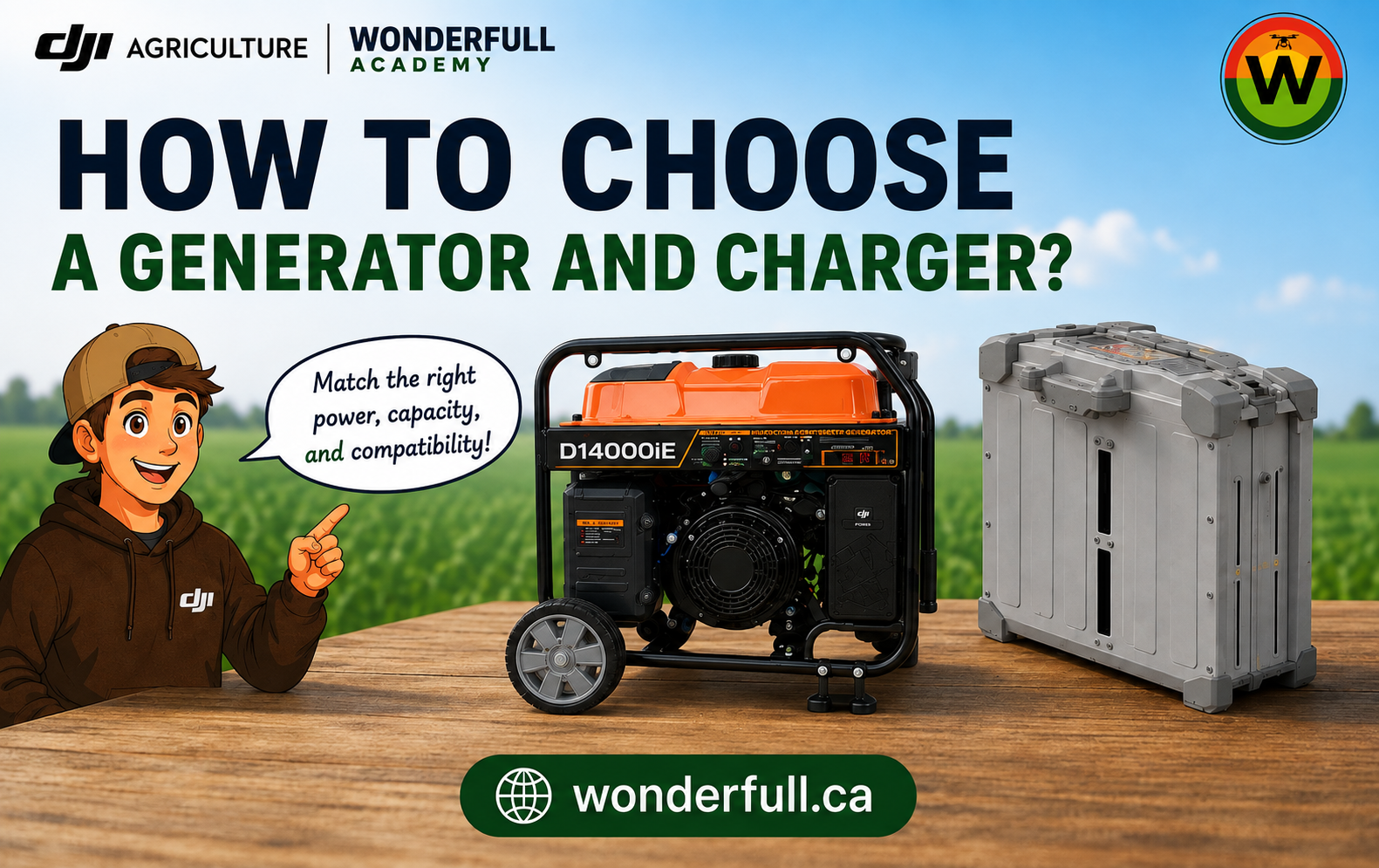
How should you set up your charging system for the T100?
Do you need a D14000iE generator?
Can you continue using a C10000?
What if you already own a generator on the farm?
Can a third-party diesel generator work with the T100?
And if you’re carrying multiple DB2160 batteries in a trailer or truck every day, how should you protect them during transportation?
Here are some of the most common questions we receive.
Q1: What Battery Does the T100 Use?
The DJI Agras T100 uses the DB2160 Intelligent Flight Battery.
The DB2160 has a capacity of 41 Ah, a nominal voltage of 52 V, and approximately 2.13 kWh of energy.
For high-volume spraying and spreading operations, however, battery capacity is only part of the equation.
The bigger question is:
Can your charging system keep up with your drone?
When planning a T100 setup, it makes sense to think of the battery, charger, and power source as one complete system.
A powerful drone is only productive when its ground support system can keep it working.
Q2: What Is the Simplest Charging Setup?
For operators who want a straightforward field charging solution, the DJI D14000iE Multifunctional Inverter Generator is one of the simplest options.
The D14000iE can charge the DB2160 directly, without requiring a separate C12000 charger.
The setup is simply:
D14000iE → DB2160
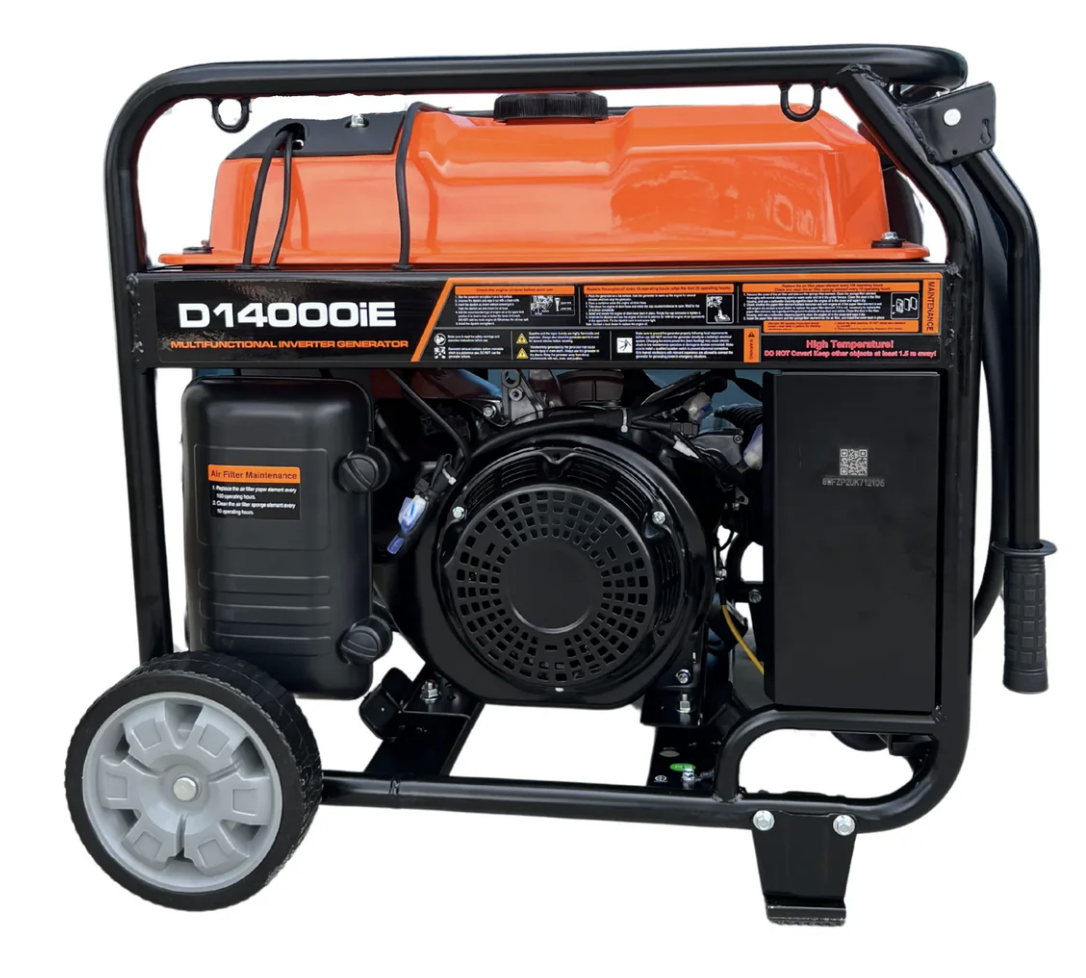
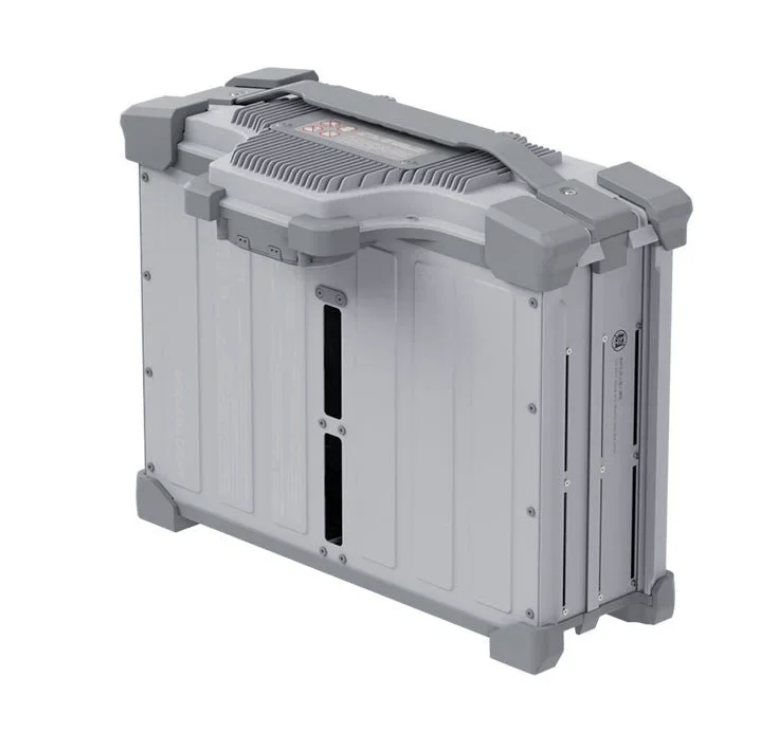
The D14000iE can provide up to approximately 11.5 kW of charging power to the DB2160.
For operators who want to bring a generator to the field, start it up, connect the battery, and charge, this is a very convenient all-in-one solution.
Q3: What About the C12000 Charger?
The C12000 Intelligent Battery Charger is another high-power charging option for the DB2160.
Unlike the D14000iE, however, the C12000 is a charger—not a generator.
It requires an external AC power source.
A typical setup looks like this:
Three-Phase Power / Three-Phase Generator → C12000 → DB2160
With a suitable three-phase power supply, the C12000 can provide up to approximately 12 kW of charging power.
This can be an excellent solution for farms that already have suitable three-phase power available, or for operators planning to use a compatible three-phase diesel generator in the field.
Q4: Can I Use C10000 With the DB2160?
Yes.
The C10000 can be used to charge the DB2160, this is part of the T100 standard package. One thing you need to pay attention is because the DB2160 uses a different battery connection, however, the appropriate DJI adapter cable is required.
The setup becomes:
Power Source / Generator → C10000 → Adapter Cable → DB2160
With a suitable 220–240 V AC input, the C10000 can provide up to approximately 9 kW of charging output.
That means it will not provide the same maximum charging power as the 12 kW C12000 setup, but it can still be a very practical option—especially if you already own a C10000.
Upgrading to a T100 does not necessarily mean replacing your entire charging system.
For farms without three-phase electrical service, or operators who do not want to purchase a three-phase generator, the C10000 can also provide a practical balance between shop charging and field charging.
Q5: I Already Own a Generator. Can I Use It?
Possibly—but generator wattage alone does not tell you whether it will work.
The first question is which charger you intend to use.
If You Are Using a C10000
The C10000 uses single-phase AC power.
With the appropriate 220–240 V input, it can provide up to approximately 9 kW of charging output.
Before connecting your existing generator, you need to verify several things:
- Output voltage
- Frequency
- Continuous rated power
- Generator receptacle/connection
- Compatibility with the charger’s electrical requirements
A generator having enough advertised wattage does not automatically mean it is suitable for the charger.
If You Are Using a C12000
The C12000 can operate from three-phase AC power.
If you are considering a third-party three-phase generator, you need to look at:
- Three-phase output voltage
- Continuous rated output
- Output connection/receptacle
- Voltage and frequency stability under sustained load
- Compatibility with the C12000 input requirements
For third-party three-phase generators used with the C12000, DJI recommends a generator with a rated power of at least 15 kW.
So:
“I already have a 15 kW generator” does not automatically mean “I can use it with my T100.”
The actual generator specifications and connections still need to be checked.
Q6: Can I Connect a Regular Three-Phase Diesel Generator Directly to a DB2160?
No.
A conventional three-phase diesel generator supplies AC power. The DB2160 should be charged through a compatible charging system.
For example:
Three-Phase Diesel Generator → C12000 → DB2160
Not:
Three-Phase Diesel Generator → Adapter Cable → DB2160 ❌
Do not attempt to create a simple cable or adapter to connect a conventional generator directly to the battery.
An adapter cable changes a connection. It does not turn an AC generator into a compatible intelligent battery charger.
Q7: So Which Setup Should I Choose?
Here is a simple way to look at it:
| Your Situation | Setup to Consider |
|---|---|
| You want a simple, field-ready charging solution | D14000iE → DB2160 |
| You already own a C10000 | C10000 + Adapter Cable → DB2160 |
| Your farm has suitable three-phase power | C12000 → DB2160 |
| You want to use a third-party three-phase diesel generator | Compatible Three-Phase Generator + C12000 → DB2160 |
| You’re not sure whether your existing generator will work | Check the generator nameplate and output connection first |
There isn’t one charging setup that is automatically best for every farm.
The right choice depends on what equipment you already own, what electrical service is available on your farm, whether you need to charge in the field, and how intensively you plan to operate your T100.
Q8: What Should I Check Before Spreading Season?
Don’t wait until the drone arrives—or until you’re ready to start spreading—to discover that your charging setup can’t keep up.
Before the season gets busy, check these four things:
1. What charger do you currently own?
C10000, C12000, or another model?
2. What are the specifications of your existing generator?
Look for rated output, voltage, frequency, and whether it is single-phase or three-phase.
3. What type of outlet or connection does your generator have?
Two generators can have similar power ratings but completely different electrical connections.
4. How intensive will your operation be?
The ground support requirements for one T100 are very different from those for multiple T100s operating continuously throughout the day.
If you’re unsure, take a clear photo of your generator nameplate and output receptacle and send it to us.
We can help you determine whether your existing equipment may be suitable before you purchase another generator.
Q9: What About Transporting DB2160 Batteries in a Trailer or Truck?
Charging is only one part of your battery setup.
Transportation and physical protection matter too.
During spreading season, DB2160 batteries may spend a lot of time travelling between fields in a trailer, pickup truck, or service truck.
Rough roads, vibration, sudden stops, shifting equipment, and contact with other tools or batteries can all expose expensive batteries to unnecessary physical stress.
For that reason, we don’t recommend simply placing batteries loose in the back of a truck or trailer.
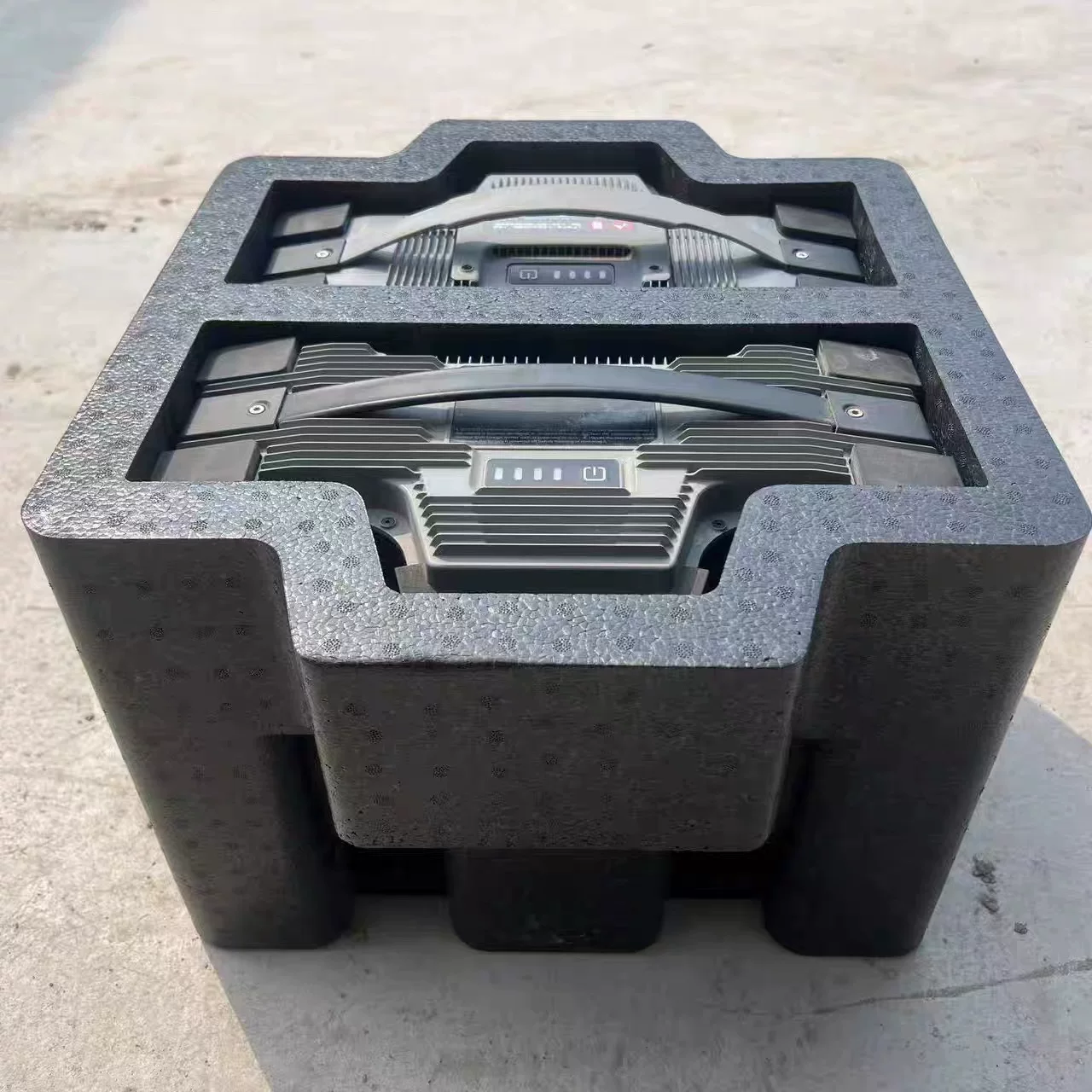
To help operators better organize and physically protect their batteries during everyday transportation, WONDERFULL has prepared heavy-duty protective foam cases for agricultural drone batteries.
The foam helps keep batteries separated and supported during transportation, reducing movement and helping protect them from everyday bumps, rubbing, and impact.
A protective case is not a substitute for applicable lithium-battery transportation, storage, or fire-safety requirements. It is simply another practical layer of physical protection for valuable equipment.
If your batteries regularly travel with you from field to field, it’s worth planning how you transport them at the same time you plan how you charge them.
👉 Explore WONDERFULL Drone Accessories & Battery Protection:
https://www.wonderfull.ca/product-category/drone-accessories/
Already Have a Generator? Don’t Buy Another One Yet.
If you already own a generator, send us a photo of the generator nameplate and its output receptacle.
If you already have a C10000, let us know that too.
We can help you look at your existing setup and determine:
- Whether your current generator may be suitable
- Whether an adapter cable is required
- Whether a C10000 or C12000 makes more sense for your operation
- Whether you actually need to purchase another generator
Spreading season is coming quickly.
Plan your charging, battery rotation, and transportation setup before the busy days arrive—so your ground support system doesn’t become the bottleneck when your T100 is ready to work.
WONDERFULL INC.
Transport Canada Recognized RPAS Flight School
Certified Advanced Flight Reviewer
Drone Compliance | Academy Training | Sales & Service
Office: 647-800-7952
WhatsApp: 647-287-6851
5955 10 Sideroad
Innisfil, ON L0L 1K0
Canada