
Skip to Main Content
    • Your Cart - $0.00
    WONDERFULL INC
    • Home
      • About Us
      • Why Choose Us
      • Events
        • Upcoming Events
        • Canada AgTech Demo
        • Event Photos
        • Field Day Registration
      • In The News
      • Careers
      • Contact Us
    • Shop
      • DJI Agriculture Drones and Parts
        • DJI T100 and Parts
        • DJI T25P and Parts
        • DJI T50 and Parts
        • DJI Legacy Parts
          • DJI T40 Parts
          • DJI T30 Parts
          • DJI T25 Parts
          • DJI T20P Parts
          • DJI T20 Parts
          • DJI T10 Parts
      • DJI Enterprise Drones & Parts
      • Drone Accessories
      • Training Courses
    • Solutions
      • Start Your Drone Business
      • Find a Drone Applicator
      • Tar Spot Is Spreading. Can You Spray When It Matters?
      • Start with AGRO
        • Which Crop Feels Most Like You?
          • Canada’s Favorite Vegetable Personalities
          • Canada’s Major Field Crop Personalities
          • Canada’s Orchard & Tree Personalities
          • Canada’s Berry Personalities
      • Drone Repair Intake Form
    • Compliance
      • Getting Started in Canada
      • Agricultural Drone Regulations
      • Advanced Flight Review Canada
      • Compliance FAQ
    • Academy
      • Who we are
        • History of Wonderfull Academy
        • Why Agricultural Drones. Why Now. Why Wonderfull.
        • Lessons Learned From North American Agricultural Drone Operators
      • Certification & Training
        • Drone Knowledge Self-Assessment
        • Transport Canada Certification Courses
        • Agriculture Drone Training
      • Learning Resources
        • Learning Center
        • Videos
        • Agriculture Drone Practical Guide
        • T100 SPEC
        • DJI Agras T100 Application Parameter Guide
          • DJI AGRAS T100 Spreading Parameters
      • Support
        • FAQ
        • Crash Recovery Program
    • Partner
    • Home
      • About Us
      • Why Choose Us
      • Events
        • Upcoming Events
        • Canada AgTech Demo
        • Event Photos
        • Field Day Registration
      • In The News
      • Careers
      • Contact Us
    • Shop
      • DJI Agriculture Drones and Parts
        • DJI T100 and Parts
        • DJI T25P and Parts
        • DJI T50 and Parts
        • DJI Legacy Parts
          • DJI T40 Parts
          • DJI T30 Parts
          • DJI T25 Parts
          • DJI T20P Parts
          • DJI T20 Parts
          • DJI T10 Parts
      • DJI Enterprise Drones & Parts
      • Drone Accessories
      • Training Courses
    • Solutions
      • Start Your Drone Business
      • Find a Drone Applicator
      • Tar Spot Is Spreading. Can You Spray When It Matters?
      • Start with AGRO
        • Which Crop Feels Most Like You?
          • Canada’s Favorite Vegetable Personalities
          • Canada’s Major Field Crop Personalities
          • Canada’s Orchard & Tree Personalities
          • Canada’s Berry Personalities
      • Drone Repair Intake Form
    • Compliance
      • Getting Started in Canada
      • Agricultural Drone Regulations
      • Advanced Flight Review Canada
      • Compliance FAQ
    • Academy
      • Who we are
        • History of Wonderfull Academy
        • Why Agricultural Drones. Why Now. Why Wonderfull.
        • Lessons Learned From North American Agricultural Drone Operators
      • Certification & Training
        • Drone Knowledge Self-Assessment
        • Transport Canada Certification Courses
        • Agriculture Drone Training
      • Learning Resources
        • Learning Center
        • Videos
        • Agriculture Drone Practical Guide
        • T100 SPEC
        • DJI Agras T100 Application Parameter Guide
          • DJI AGRAS T100 Spreading Parameters
      • Support
        • FAQ
        • Crash Recovery Program
    • Partner
    22 Aug 2026

    Drought Has Already Hurt the Corn. Can Drones Help Protect What’s Left?

    by Jenny | posted in: Log In | 0
    Post Views: 43

    Recently, we’ve seen several farmers sharing what they’re finding in their cornfields this year. The ears don’t all look the same, but many of these problems may point back to one common factor: drought and heat stress during critical stages of corn development.Drought Has Already Hurt the Corn. Can Drones Help Protect What’s Left?

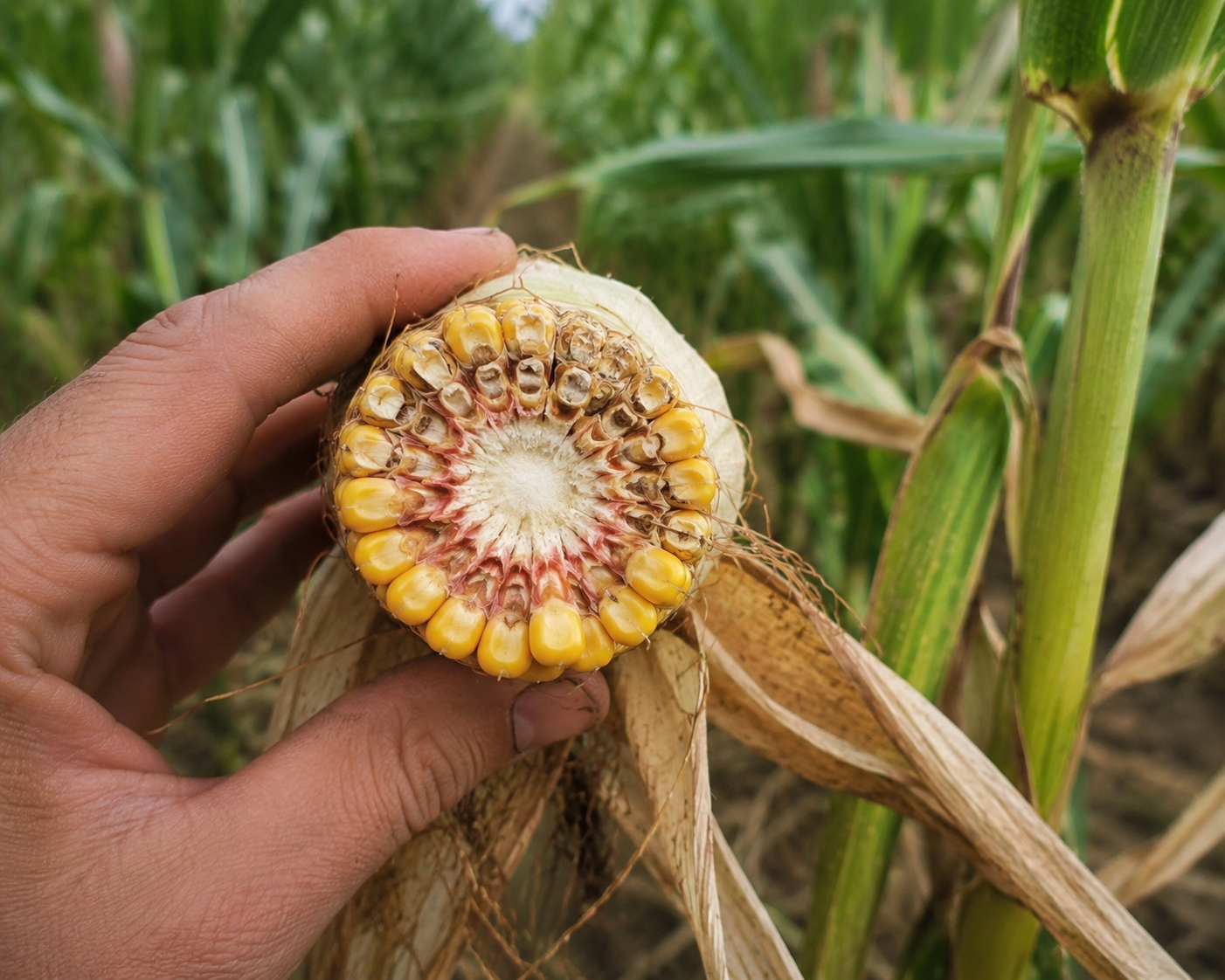
    One common symptom is an ear that has developed normally in size but shows poor kernel set, tip-back, or kernels that failed to develop properly.
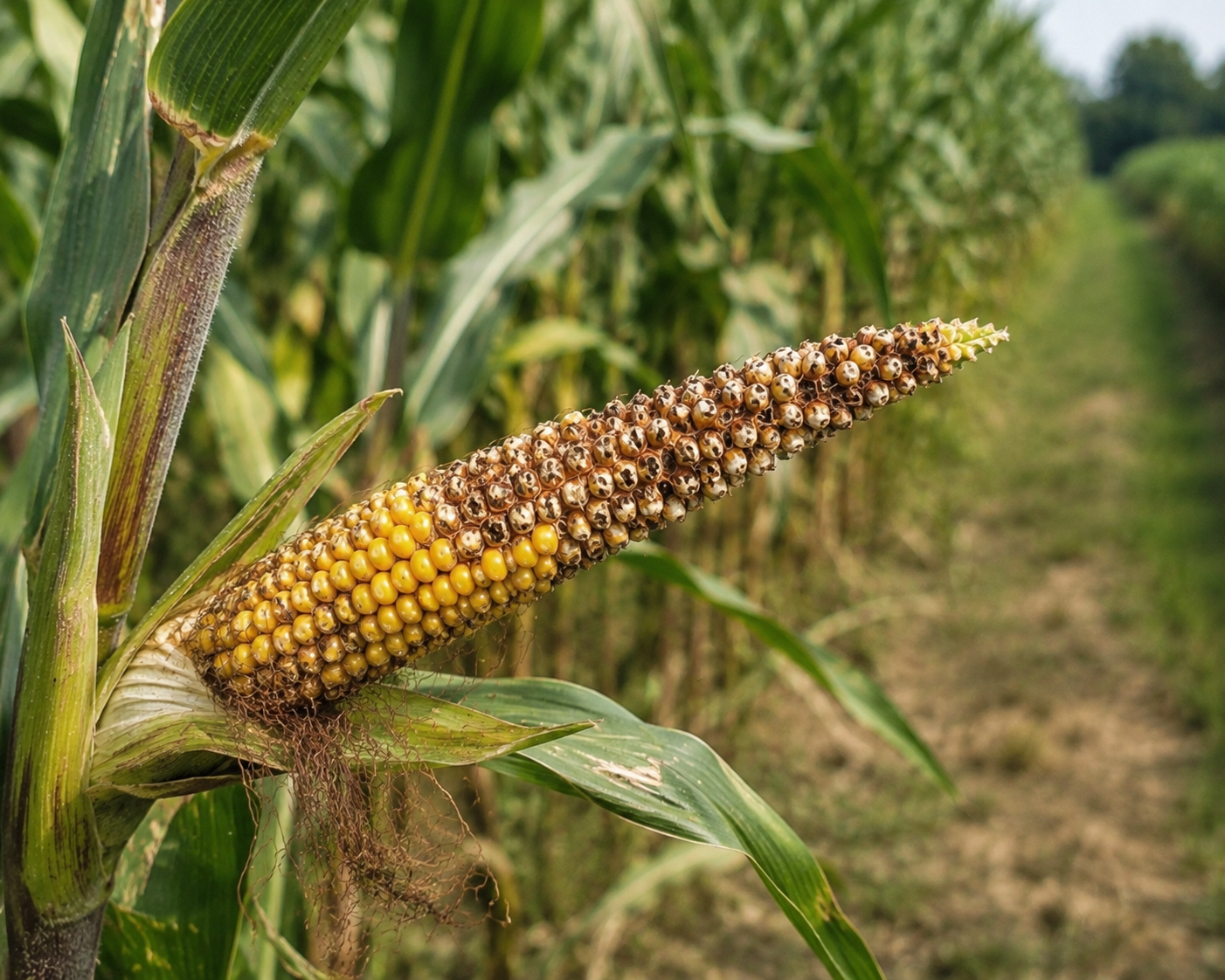
    Corn is especially sensitive to water stress during tasseling, silking, and pollination. Under severe drought, the tassel may begin shedding pollen while silk emergence is delayed, creating a mismatch between pollen shed and silking. Even when pollination occurs, continued water stress afterward can cause some developing kernels to abort.

    The result can be an ear where some kernels develop normally while other areas remain unfilled or contain kernels that stop developing early.
    Another situation is when a corn plant produces two ears, but the second ear remains very small and develops few or no viable kernels.
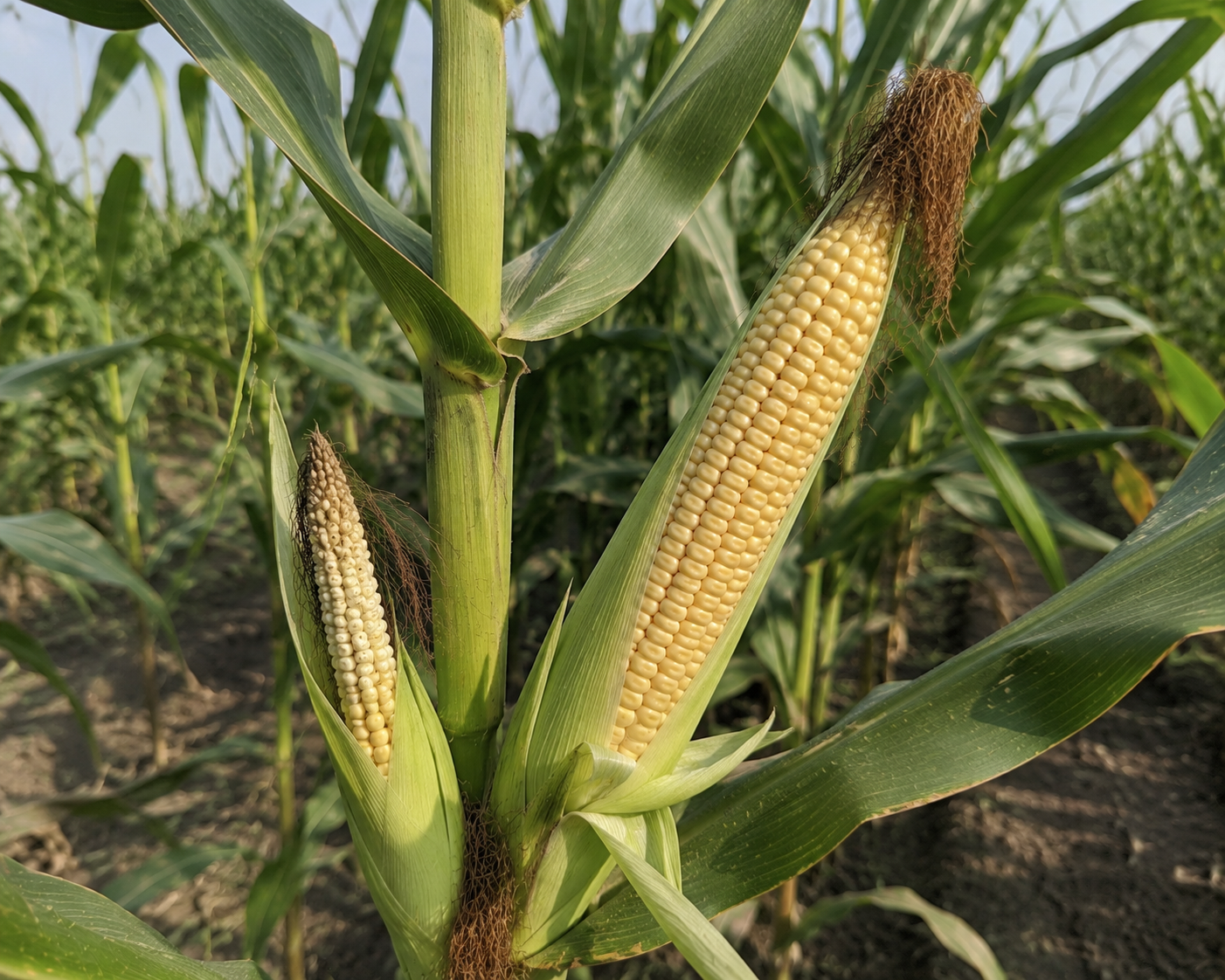
    Seeing two ears on a plant might look like a sign of higher yield potential, but that isn’t necessarily the case.

    Under favorable conditions—with sufficient moisture, nutrients, and photosynthetic capacity—a second ear may contribute to yield. But under drought or other stress, the plant has limited water and carbohydrates available and will generally prioritize the primary ear.

    As a result, the main ear continues filling while the secondary ear may stop developing or abort entirely.

    So although these two situations look very different in the field, they can tell us something similar:

    Final corn yield depends not only on plant size or the number of ears produced, but also on whether the crop has enough water and resources during critical stages such as pollination and grain fill.

    For rain-fed cornfields without irrigation, severe drought during pollination can cause yield losses that later management simply cannot reverse.

    But that doesn’t mean there is nothing left to manage.

    Once drought has reduced a field’s yield potential, the question becomes: How do we protect the yield that is still there?

    Drought-stressed corn can still face additional losses from insects, foliar diseases, and ear diseases. During grain fill, protecting healthy leaf area and the kernels that have already developed can still be important for final kernel weight and harvestable yield.

    This is where agricultural drones can play a role.

    Drones cannot make it rain. They cannot replace irrigation where there is no water source, and they cannot bring aborted kernels back.

    What they can do is help farmers scout fields quickly, identify differences in crop condition across the field, and—when pest or disease pressure justifies treatment—provide timely and targeted crop protection applications. In tall, fully canopied corn, drones can also reduce the need to drive large ground equipment through the crop and avoid some of the associated crop damage.

    Most importantly, after a drought, the management objective may need to change.

    The goal is no longer to recover yield that has already been lost. It is to protect as much of the remaining yield potential as possible.

    In other words:

    Drones can’t solve drought. But after drought has taken its toll, they can help farmers identify problems sooner, respond to pest and disease pressure more quickly, and protect the yield that remains.

    WONDERFULL INC.

    Transport Canada Recognized RPAS Flight School
    Certified Advanced Flight Reviewer

    Drone Compliance | Academy Training (DJI Standard) | Sales & Service

    Office: 647-800-7952
    Text: 647-287-6851

    5955 10 Sideroad
    Innisfil, ON L0L 1K0
    Canada

    © 2026 WONDERFULL INC - WordPress Theme by Kadence WP