
From Ecological Restoration and Vegetation Management to Precision Grazing and Aerial Intelligence
Farming has never been easy. And managing land for both agriculture and energy adds another layer of complexity.
What is fascinating about solar grazing is that two places as different as Ontario and western China — with very different climates, landscapes and agricultural systems — have arrived at a surprisingly similar question:
How do we manage the vegetation underneath solar panels?
In China, that question has gradually led from ecological restoration to sheep grazing, changes in solar-farm design and, at larger scales, drones, sensors and digital livestock management.
Ontario has been developing its own answers through working solar-grazing projects such as Arnprior.
The paths are different, but the challenges are beginning to overlap.
And that creates an interesting opportunity:
What can we learn from each other?
01 | First Came the Solar Panels.
Talatan, in Qinghai, western China, sits nearly 3,000 metres above sea level.
It is dry, windy, and had experienced serious desertification.
Then came solar.
Large photovoltaic developments began transforming the landscape, with a straightforward objective:
Use abundant sunlight to generate clean electricity.
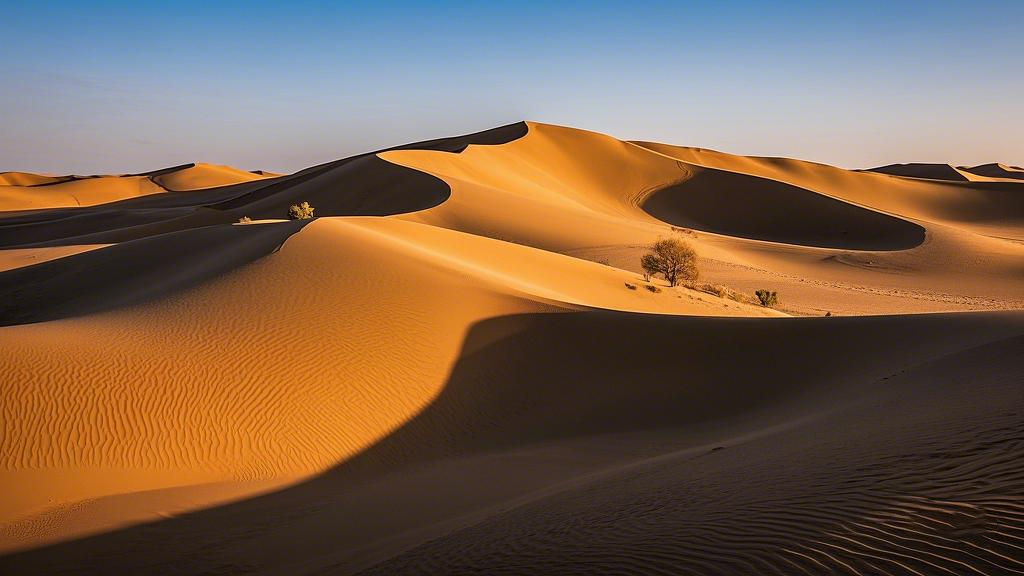
It was the starting point, before the solar.
Grass started growing underneath the panels.
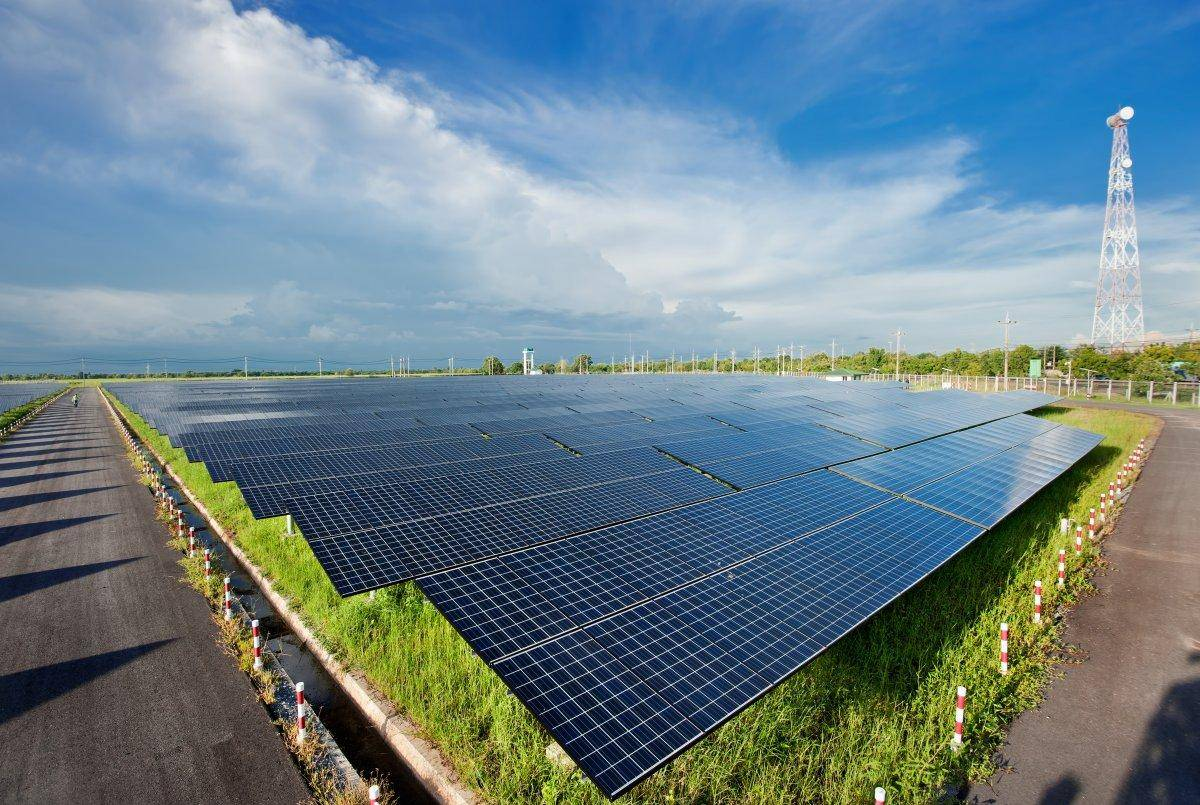
The Change Was Measurable.
Why did vegetation begin to recover?
The solar arrays changed the microclimate underneath them.
They reduced near-ground wind speeds.
They created shade.
They reduced soil-water evaporation.
Water used during panel cleaning also contributed additional moisture.
And over time, vegetation began returning to land that had previously been much drier and more sparsely covered.
Chinese government data reported that within the photovoltaic arrays:
↓ 41.2%
Average wind speed
↑ 32%
Soil moisture at 20 cm depth
~80%
Vegetation coverage after restoration
What started as an energy project was beginning to influence the ecology underneath it.
Solar was no longer just occupying the land. It was changing the land.
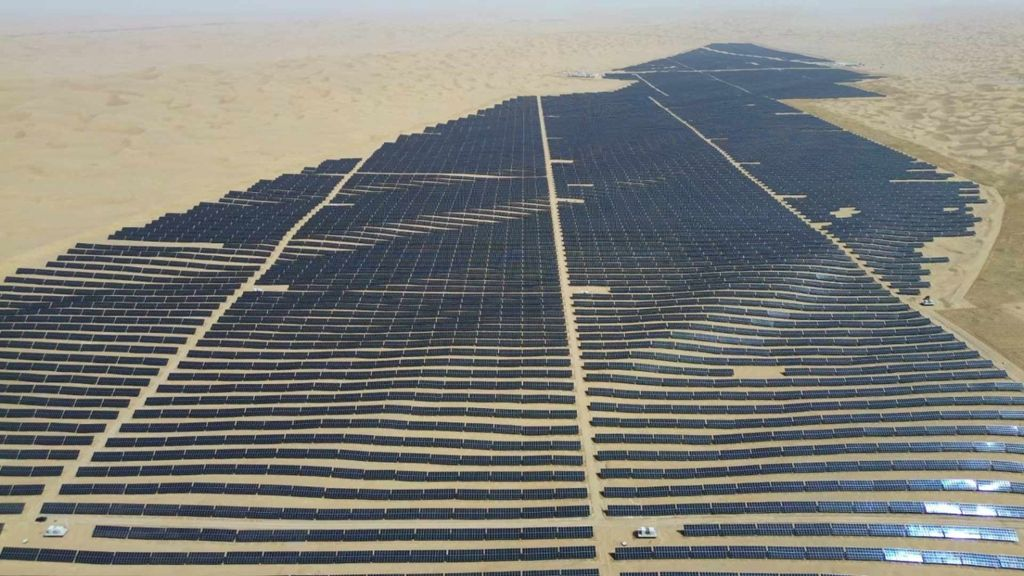
Talatan photovoltaic power base in Qinghai, China — utility-scale solar development in a high-altitude, arid landscape. Image: Xinhua / State Council Information Office
02 | Then Came the Next Problem: The Grass Was Growing Too Well.
More vegetation was good news from an ecological perspective.
But from the perspective of a solar operator, that success created a new management challenge.
Tall vegetation
↓
Panel shading and reduced access
↓
Potential impact on generation and maintenance
And when vegetation dried later in the season:
Dry vegetation
↓
Increased fire risk
Then there was the question of scale.
On a very large solar farm, controlling vegetation manually or mechanically means:
More labour. More mowing. More ongoing maintenance cost.
So an ecological success had created a very practical operational problem:
How do you manage vegetation across a solar farm — efficiently, safely and at scale?
In Qinghai, one of the answers turned out to be surprisingly simple.
Sheep.
03 | Once the Sheep Arrived, This Was No Longer Just About Raising Sheep
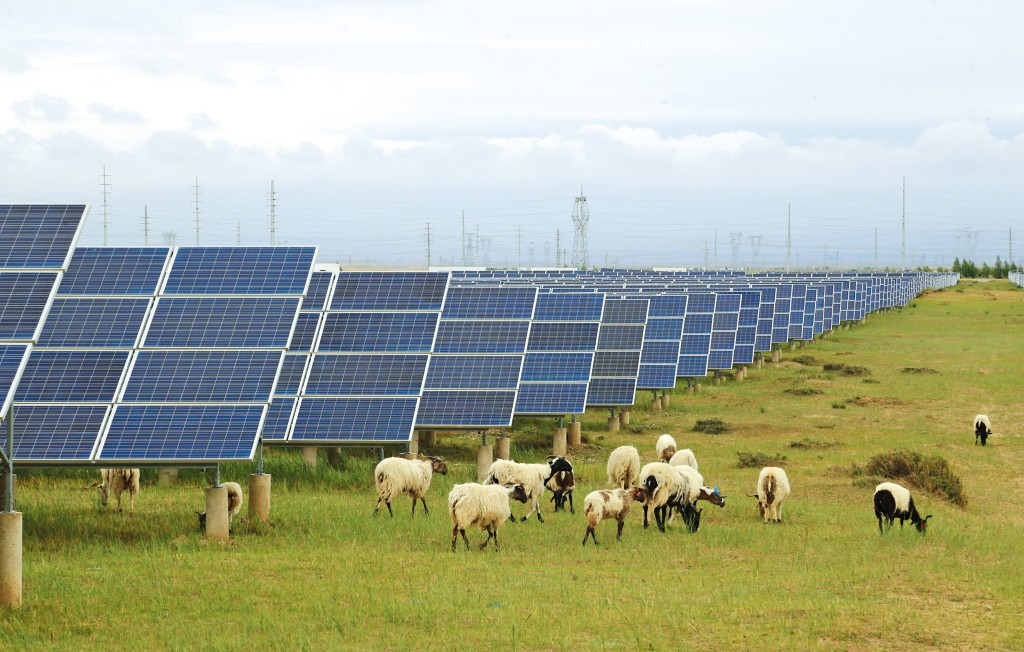
Sheep began to be introduced into parts of these photovoltaic areas to help manage vegetation.
What do they do?
Something remarkably simple:
They eat the grass.
But from the perspective of a solar operator, that simple activity has a very different value.
The sheep are providing:
Biological Vegetation Management
In practice, the idea is actually very simple: the sheep eat the grass that would otherwise need to be cut.
That means less mowing and less labour for vegetation control. At the same time, the sheep get forage and shade from the panels, while their manure goes back into the soil.
What I find interesting is that, at this point, the sheep are no longer just grazing inside a solar farm.
They are actually doing a job for the solar farm.
So what began as:
Solar
↓
Solar + Vegetation
↓
Solar + Vegetation + Livestock
To me, this is one of the most interesting lessons from China’s “solar sheep.”
The sheep are not simply animals that happen to be grazing inside a solar farm.
They are becoming part of the solar farm’s operating system.
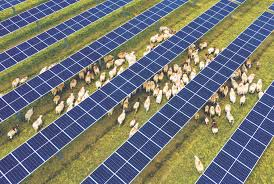
Sheep grazing between photovoltaic arrays in Qinghai. What began as an energy project gradually evolved into a solar–vegetation–livestock system.
04 | And Then Another Question Emerged: If Sheep Are Part of the System, Why Not Design the Solar Farm With Them in Mind?
This is where I think the comparison with Arnprior becomes particularly interesting.
What I really like about the Arnprior story is that it wasn’t originally built as an agrivoltaic livestock system.
Solar came first. Sheep came later.
The Arnprior Solar Project began operating in 2010.
In 2017, Shady Creek Lamb introduced approximately 50 ewes as part of an initial solar-grazing pilot.
By 2022, published case studies described approximately 500 sheep grazing the site from spring through fall.
That evolution is important.
It means Arnprior has already demonstrated something that many projects are still trying to figure out:
A conventional solar farm can evolve into a successful solar-grazing system.
And that raises a really interesting next question.
Once we know that sheep can become a long-term part of solar-site management, do we keep asking:
“How can we fit sheep into an existing solar farm?”
Or do we eventually start asking:
“If we know sheep will be part of the system, how would we design the solar farm differently from the beginning?”
That is a question China has also begun to explore — and it leads to an interesting distinction:
Grazing-Compatible Solar vs. Grazing-Designed Solar
05 | From “Grazing-Compatible” to “Grazing-Designed”
This is where some of the experience from China becomes particularly interesting.
As solar grazing and ecological restoration developed in Qinghai, the conversation gradually moved beyond:
“Can sheep graze here?”
toward:
“If livestock are going to be part of the system, should we design for them from the beginning?”
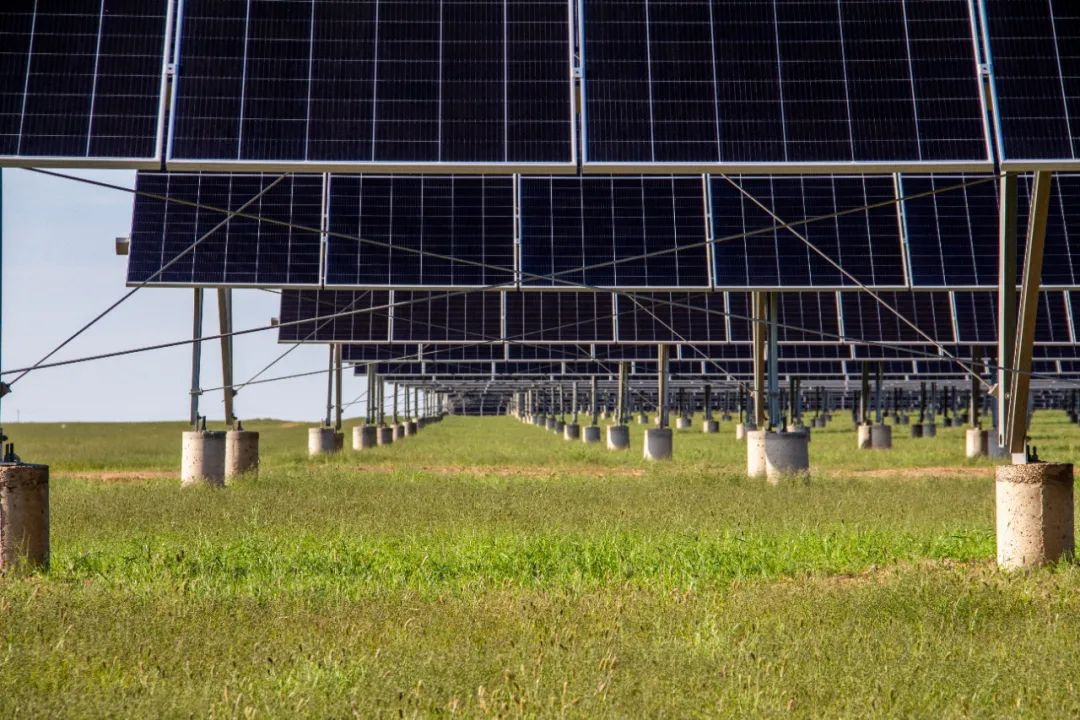
At Talatan, some solar mounting structures were reportedly raised from approximately:
0.5 m → 1.2 m
Other projects in the region have used approximately 1.5 metres of clearance, in part to make it easier for sheep to move and graze underneath the modules.
The numbers themselves are not really the most important part.
The change in thinking is.
There is a big difference between:
Grazing-Compatible Solar
“The solar farm already exists. How can we make grazing work within it?”
and:
Grazing-Designed Solar
“If livestock will be part of vegetation management for the next 25–30 years, what should we design differently from day one?”
Once you ask that question, panel height is only the beginning.
It can influence:
Panel clearance · Row spacing · Fencing
Water access · Livestock movement
Cable protection · Equipment access
Pasture establishment · Monitoring
And perhaps even something more fundamental:
How much of the future vegetation-management cost can be influenced at the design stage?
I don’t think the Chinese design is necessarily the right design for Ontario.
But I do think the experience raises a useful question:
If we designed an Ontario solar farm today knowing that sheep would be part of its vegetation-management strategy from the beginning — what would we do differently?
Here we can see the physical relationship between:
Sheep + forage + panel Space Management
As grazing became part of long-term site management, solar design itself began to adapt — including greater clearance to make livestock movement easier.
06 | But As the System Gets Bigger, Another Problem Appears
On a few hundred acres, an experienced farmer or shepherd may know:
Where the sheep are.
Where vegetation is getting high.
Which areas have already been sufficiently grazed.
Where the flock should move next.
But what happens when the operation grows from:
200 acres
↓
500 acres
↓
2,000 acres
↓
10,000 acres
At some point, the management challenge begins to change.
The question is no longer only:
“How do I manage my sheep?”
It increasingly becomes:
“How do I manage all of this information?”
That is another lesson that can come from the scale of solar development in China.
07 | And This Is Where Drones Enter the Story
I don’t think the most interesting use of a drone is simply:
“Using a drone to look at solar panels.”
Drone-based solar inspection is already a well-established application.
What interests me much more is:
Can aerial intelligence connect Solar + Pasture + Sheep as one system?
Some large photovoltaic grazing operations in China have already begun digitizing aspects of livestock management.
For example, sheep in some Qinghai projects use electronic ear tags.
These tags provide an animal identity and can be associated with information such as:
Age
Ownership
Vaccination records
and other livestock-management data.
As operations become larger, GPS, cameras, thermal imaging, drones and other monitoring technologies can potentially add another layer of information.
But to me, the interesting question isn’t:
“Can a drone find a sheep?”
The more important question is:
Can data help us manage the entire solar-grazing system better?
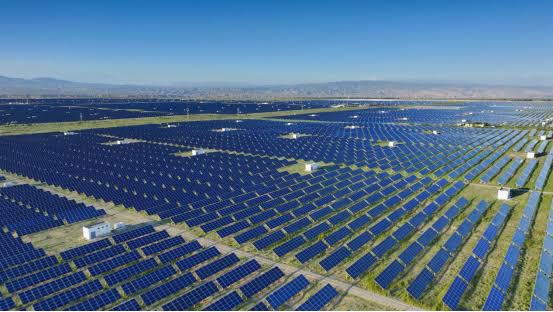
At very large sites, aerial monitoring offers a different perspective: not only where the sheep are, but how solar infrastructure, vegetation and grazing interact across the landscape.
08 | Imagine One Solar Farm With Three Maps
LAYER 1 — SOLAR
Panel condition
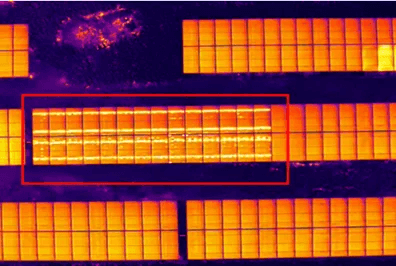
Hotspots
Thermal anomalies
Potential generation issues
Vegetation shading
↓
LAYER 2 — PASTURE
Vegetation height
Biomass
Ground cover
Regrowth
Weed distribution
Potential shading risk
↓
LAYER 3 — SHEEP
Location
Movement
Grazing intensity
Areas already grazed
Missing or isolated animals
Now imagine putting those three layers together.
Suddenly, the purpose of the drone is no longer to tell us:
“The NDVI here is 0.63.”
Instead, we can begin asking operational questions:
“Where should the sheep graze next?”
Where is vegetation approaching the panels?
Which areas have already been sufficiently grazed?
Which areas should rest?
Where are sheep unable to control vegetation effectively?
Where will mechanical mowing still be required?
Are there solar modules in the same area showing thermal anomalies?
Could one flight potentially support both:
Solar Inspection + Vegetation Management?
This is what I think of as:
Precision Solar Grazing
09 | But the Drone Isn’t the Answer by Itself
This is something I am particularly interested in observing at Arnprior.
Looking at early photographs of the site, the panels appear relatively close to the ground.
That may actually work very well for sheep.
They can move underneath the arrays.
The panels provide shade.
And vegetation grows underneath.
But from the perspective of aerial monitoring, that creates another challenge:
The panels themselves block our view.
And some of the hardest vegetation to manage may be exactly where a conventional top-down drone image cannot see very well:
Under panels
Around posts
Along fence lines
Around electrical equipment
Near water points
Around gates
So the future solution may not be:
Drone Only
It may be:
Drone + Livestock Tags + Sensors + Farmer Knowledge
The objective of technology is not to replace the farmer.
It is to help the farmer:
See more. Measure more. Decide faster.
10 | What Can We Learn From Working Solar-Grazing Systems?
What makes Arnprior especially valuable is that it is not an idea on paper. It is a system that has been working and evolving for years.
The people managing it every day understand things that are difficult to capture in a report — what works well, what takes more effort, and where the practical challenges really are.
China brings a different perspective. Some projects operate at a much larger scale, where questions around vegetation, livestock and monitoring begin to look different.
Putting these experiences side by side may help us see things we would otherwise miss.
For Ontario, the question is no longer simply whether solar grazing can work. Arnprior has already shown that it can.
The more interesting question is:
What would make it easier to manage — and easier to grow?
The answer might be fencing, water, labour, vegetation management or better coordination between farmers and solar operators.
Drones, livestock tags and better monitoring may help in some cases. In others, the best solution may not be technology at all.
Understand the need first. Then find the right tool.
Ontario brings practical experience. China brings experience from a different environment and scale.
Neither is a blueprint for the other — but there is a lot we can learn from each other.
11 | One Question Worth Asking
Imagine a successful solar-grazing operation is ready to double in size.
What would make that difficult?
The answer could be land, fencing, water, labour, livestock, contracts or management.
It might be a problem that technology can help solve — or it might not.
But this is where the next opportunity often begins:
Understand what becomes difficult as the system grows — then find the right way to make it easier.
12 | Where Could This Go Next?
The story in China started with solar panels.
Then the grass came back.
The grass needed to be managed, so sheep became part of the solution.
As projects grew larger, new questions appeared around grazing, monitoring and day-to-day management.
One solution led naturally to the next question.
Arnprior has followed its own path — and has already shown that solar grazing can work in Ontario.
What I find interesting is what happens from here.
China has experience with scale. Ontario has valuable experience making solar grazing work under very different farming and operating conditions.
There is no reason the two should look the same.
But there may be a lot worth sharing.
And perhaps that is where the next good idea starts.
WONDERFULL INC.
Transport Canada Recognized RPAS Flight School
Certified Advanced Flight Reviewer
Drone Compliance | Academy Training | Sales & Service
Office: 647-800-7952
Text: 647-287-6851
5955 10 Sideroad
Innisfil, ON L0L 1K0
Canada